
• Skip to primary navigation
  • Skip to main content

← cbs.dk

CBDS

CBDS

Business in Development Studies

  • Home
  • Blogs
    • Corporate Social Responsibility
    • Critical Debates
    • Entrepreneurship 
    • Global Value Chains
    • Green Transition
    • Industrialization
    • Humanitarianism
  • Podcasts
  • Contact
  • Show Search
Hide Search

esk.msc@cbs.dk

When the Same Solution Fails in Different Places: Why Cross-Sector Partnerships in the Global South Benefit from a Place-Based Approach

30 June 2026

By Ahaana Mahanti

For governments, companies, and philanthropies, few things are as attractive as a well-designed cross-sector partnership (CSP), i.e., a collaborative arrangement between private, public, and civil society actors that aims for scalable solutions to development challenges. A successful pilot becomes the blueprint for regional, national, or even global expansion. Yet in the pursuit of scale, a critical question is often overlooked: does the solution still work when it travels?

CSPs are not synonymous with Corporate Social Responsibility (CSR), though CSR investment can be one of the funding mechanisms that initiates or sustains them. What distinguishes CSPs is their multi-actor character: donors, companies, NGOs, government agencies, and communities otherwise treated as beneficiaries such CSPs are designed to serve. Together, they co-govern and co-implement, each bringing different resources, accountabilities, and logics to the table.

My research follows a decade-long CSP, the India Water Project (IWP), which brought together the Poul Due Jensen Foundation (a Danish philanthropic foundation affiliated with pump manufacturer Grundfos), Sunlit Future (an Indian solar energy provider), state-level government missions, and nine local NGOs. The project deployed solar-powered pumps to provide safe drinking water to remote villages across eight Indian states. It was technologically sound, aligned with India’s Jal Jeevan Mission, a national initiative aimed at providing universal household drinking water access through piped connections, and implemented with the support of local NGOs. In theory, it had all the ingredients for successful replication.

Yet in practice, outcomes varied significantly across villages. In some places, women saved hours each day from not having to walk long distances to collect water, girls returned to school, and communities pooled funds to maintain and upgrade infrastructure. In others, pumps fell into disrepair, elite capture excluded marginalized households, and gender inequities persisted.

What explains this divergence? Replication is not neutral.

The Limits of “Plug-and-Play” CSP Implementation

CSPs, like many development interventions, are often treated as scalable templates. Identify a working model, standardise it, and roll it out. In socially stratified and institutionally fragmented contexts across much of the Global South, however, infrastructure alone does not determine outcomes. Local social relations and governance structures do.

A place-based approach is not new to the social sciences. Urban planners, human geographers, and community development scholars have long argued that interventions must be attuned to the specific material, relational, and institutional conditions of the places in which they are embedded. What my research contributes is an application of this insight to CSPs and SDG implementation in rural Global South contexts, where this kind of attentiveness has often been crowded out by donor pressures for speed, coverage, and standardisation.

In one village, the placement of a water tank triggered conflict because the local government (panchayat) demanded compensation for land despite already receiving funds from national water schemes. In another, women were discouraged from participating in governance committees despite being the primary users of water. A water pump does not function in isolation. It exists within a web of social norms, institutional relationships, and historical inequalities.

As one project leader from one of the partner NGOs explained: “You can’t just install the same pump and expect the same results. Caste dynamics, gender roles, local politics, and governance structures matter more than we know… every village is unique in that regard.”

The lesson is clear. Technology can enable access, but the spatial setting within which it is implemented determines whether that access becomes equitable and durable.

Communities First: Beyond Rhetoric, Toward Embedded Practice

Community-driven development is a widely used phrase, but implementation often falls short. Many NGOs and CSR initiatives outsource community mobilization to third-party contractors or rely on facilitators responsible for several villages at once. While efficient on paper, this approach often creates distance between projects and the communities they serve.

The most effective NGOs take a different approach. They treat community engagement not as a checkbox or a PR exercise but as infrastructure in its own right.

Consider Bala Vikasa, a Telangana-based NGO guided by a deceptively simple but powerful philosophy: build the community before building the project. They distinguish between “hardware” (physical infrastructure) and “software” (social infrastructure such as leadership development, inclusive governance, and community mobilization). Before laying a single pipe, Bala Vikasa invests ₹50,000 to ₹1,00,000 (approx. €500-€1,000) to convene the village, identify local leaders, and establish representative committees. This groundwork ensures that when the ₹5-10 lakh (approx. €5,000-€10,000) infrastructure project is implemented, the community sees it not as a handout but as their own. In one village, residents independently raised ₹2.5 lakh (approx. €2,300) to replace a damaged pump, a strong signal of local ownership and sustainability.

Bala Vikasa also evaluates outcomes using a Social Return on Investment (SROI) framework. A ₹3 lakh (approx. €2,800) investment in a village water purification plant generated an estimated ₹15 lakh (approx. €14,000) in annual household savings, i.e., a 5:1 return. The financial gains were significant, but the broader impacts extended beyond economics: improved health, higher school attendance, and restored dignity.

Unlocking Hidden Value: Community-Based Asset Management

Before launching new projects, Bala Vikasa promotes what it calls Community-Based Asset Management. The premise is simple: before importing resources, identify and leverage what already exists in the village.

Community members are encouraged to examine their surroundings not as aid recipients but as problem-solvers and stewards. They are asked to observe: What resources do we already have? What assets are underutilized? What solutions might come from within?

In one agricultural resilience program, farmers explored alternatives to expensive chemical fertilizers that were degrading soil and affecting health of the locals. The community walkthrough revealed overlooked resources such as cow dung, cow urine, tree leaves, buffalo milk, and ghee; ingredients historically used in organic farming practices but abandoned during the shift toward industrial agriculture. Through demonstrations and training, farmers learned to produce natural fertilizers using these materials. The results were tangible: increased yields, lower input costs, and improved market returns. What began with five farmers grew to more than 2,000, largely through knowledge sharing rather than external funding.

In Bala Vikasa’s water projects, villagers similarly mapped existing infrastructure such as abandoned panchayat office buildings, unused school structures, and defunct storage facilities. Instead of constructing new plants on contested land, communities repurposed existing spaces, reducing costs and avoiding disputes.

As the NGO’s Executive Director explained, “when everything is given freely, nothing is truly valued. But when communities co-invest through land, labor, or leadership, they develop a stronger stake in sustaining the outcomes.”

This approach reflects a philosophy of embedded empowerment. Development becomes a collaborative enterprise rather than a technical fix. It demands attitudinal shifts from dependency to agency, from waiting for help to unlocking what is already in hand. In the long run, this kind of asset-first thinking helps address the larger, interconnected web of social and environmental vulnerabilities, from food insecurity and income volatility to gender exclusion and infrastructure decay. Community-based asset management doesn’t just prepare people for a project, it prepares them to own and evolve it.

A Place-based Approach to Governance: What CSP Partners Need to Understand

A place-based approach goes beyond mapping geography. It requires understanding how local power structures operate: who decides, who is excluded, how conflicts are managed, and how formal and informal institutions interact (Shrivastava & Kennelly, 2013; Massey, 2004). This approach draws on decades of place-based thinking in urban planning and human geography, bridging that knowledge into the domain of cross-sector partnerships and SDG implementation. The most effective NGOs (in terms of long-term project success) I studied created village-level committees with representation from women, youth, and marginalized castes. They aligned project timelines with panchayat meetings, integrated government funding from national schemes, and leveraged local schools and self-help groups for outreach. This hyperlocal orchestration isn’t slow or inefficient. It is what makes development durable.

Designing for Intergenerational Impact

Ultimately, the goal of any service delivery project CSP operating in remote, under-resourced areas must go beyond short-term access to infrastructure. It must address intergenerational poverty. Impact assessments must therefore go beyond counting taps installed or liters delivered. They should include indicators such as, aligned with SDGs 1-6 and 10:

• Time saved for women and girls, enabling education, rest, or income-generating activities

• Reduction in waterborne illnesses and healthcare costs

• Improved school attendance and reduced dropout rates among adolescent girls

• Household nutrition and food security through kitchen gardens irrigated with surplus water

• Women’s participation in leadership and decision-making, tracked over time.

These indicators reflect not just access, but agency, a far stronger predictor of long-term development outcomes. Dignity, durability, and agency are not standalone SDG targets, but they are precisely what determines whether CSP investment in infrastructure generates sustained change or deferred fragility.

What This Means for Donors, NGOs, and Government Agencies

If there’s one lesson from this work, it is that durability requires rethinking the very logic of scale.

For donors and philanthropic foundations:

• Treat place sensitivity as a design requirement, not an ex-post adjustment. Funding decisions should incorporate spatial diagnostics: settlement patterns, infrastructural deficits, social stratification, and local governance capacity.

• Resource the brokering work. Facilitation, dispute resolution, governance formation, and ongoing community follow-up are ethical infrastructure. Without sustained funding for this work, CSPs risk producing technically functional but socially fragile assets.

• Rethink evaluation regimes. Integrate justice-oriented indicators such as who participates in governance, how grievances are resolved, whether marginalised hamlets benefit equitably – alongside conventional output metrics.

• Redefine success of CSPs. Ask: Have we reduced burdens? Increased agency? Shifted power? Increased choice?

For NGOs and implementing organisations:

• Understand that infrastructure delivery and governance formation cannot be separated. The durability of outcomes depends less on technical sophistication than on whether governance routines are locally legitimate and inclusive.

• Recognise that “community participation” is not a sufficient safeguard against exclusion. In stratified settings, participation must be actively designed, through gender-balanced committees, transparent financial rules, and mechanisms for voice from peripheral hamlets.

• Treat NGOs as strategic partners with governance intelligence, not project vendors. They often act as cultural translators, systems integrators, and informal policy brokers.

For government agencies:

• Recognise and institutionalise the governance-building role of embedded NGOs, rather than treating them solely as delivery contractors.

• Treat place sensitivity as a governance principle. Uniform templates risk flattening the socio-spatial differences that determine whether infrastructure is used, maintained, and governed equitably.

• Extend public accountability beyond asset creation to include distributive and procedural outcomes, i.e., who controls resources, whose grievances are heard, and who bears ongoing maintenance responsibilities.

Principles Travel Better Than Templates

What holds true for rural India applies across the Global South, in parts of Africa, Southeast Asia, and Latin America where inequality is entrenched, infrastructure is patchy, and governance is often contested. International NGOs and donor agencies must realize that scaling interventions without adapting and reconfiguring them to the place can undermine their impact. What is needed is not solutions that scale but systems that adapt.

Place-based development may not lend itself to flashy dashboards or linear timelines. But it creates something far more valuable, and that is dignity, durability, and agency. These outcomes are largely absent from the SDG target framework, which is precisely what makes them worth naming: achieving the SDGs in marginalized contexts requires these additional dimensions alongside conventional metrics.

And ultimately, that is what development should achieve.

Ahaana Mahanti is a PhD Fellow at CBS investigating how cross-sector partnership models operate on the ground in marginalized settings, specifically within the empirical context of water governance in rural Indian communities.


Hybrid Seminar Debate Series “What Is A Just Green Transition?” by Lindsay Whitfield

21 May 2026

The seminar series What Is a Just Green Transition? sought to foster debate aimed at finding solutions that move beyond black-and-white positions. It provided a platform for discussing the complexities of how democratic politics shape the speed, distribution, and societal acceptance of the green transition across different geographic scales, while also examining how economic strategies centered on competing in new green technologies are reshaping global capitalism.

The series placed particular emphasis on the relationship between democratic politics and economic objectives within the green transition. Organized around five thematic sessions, it invited panellists to discuss and debate a set of key political and economic questions surrounding climate change, industrial policy, and global transformation.

The series was hosted by Professor Lindsay Whitfield of Copenhagen Business School (CBS), Director of the Observatory for Just Green Transitions, and co-organized by the CEU Democracy Institute and the Centre for Business and Development Studies (CBDS) at CBS.

The Observatory for Just Green Transitions brings together researchers and institutions from across Europe and beyond, including Central European University in Budapest and Copenhagen Business School, to study the political, socio-economic, and geopolitical dimensions of contemporary green transformations.

1. Is Green Capitalism an Oxymoron?

The first seminar brought together contributors to the 2025 Forum in Development and Change on The Political Economy of Renewables Capitalism to debate three different perspectives on the greening of capitalism. One perspective argued that capitalism has historically been inseparably linked to fossil fuels and therefore cannot truly be “greened.” A second perspective suggested that economic, environmental, and social justice can only be achieved if societies move beyond the pursuit of continuous economic growth, regardless of the underlying energy mix. A third perspective focused on whether the green transition can instead be leveraged to create more socially just and environmentally sustainable capitalist economies.

Participants:
Murat Arsel, International Institute of Social Studies of Erasmus University Rotterdam
Nikita Sud, University of Oxford
Lindsay Whitfield, Copenhagen Business School

Moderator:
Jacob Hasselbach, Copenhagen Business School

Watch the recording here

2. Does the Green Transition Open Pathways Out of the Periphery?

The second seminar focused on debates surrounding whether the green transition can truly be considered a “just” transition. One perspective argued that green energy transitions deepen polarization and dependency between wealthy and poorer countries, with decarbonization in richer economies taking place at the cost of intensified social and environmental exploitation in peripheral regions.

An opposing perspective argued that countries in the Global South may be able to strategically position themselves within new energy infrastructures and cleantech value chains. From this perspective, the green transition could create opportunities for latecomer economies to become first or fast movers in emerging green industries.

The discussion therefore moved beyond asking whether the green transition is “just” and instead explored whether it has the potential to reshape productive relations and hierarchies within global capitalism.

Participants:
Ilias Alami, University of Cambridge
Aldo Madariaga, Diego Portales University, Chile
Elvis Alvenyo, University of Johannesburg (online)
Stine Haakonsson, Copenhagen Business School

Moderator:
Lindsay Whitfield, Copenhagen Business School

Watch the recording here

3. How Do We Square Democratic Rights with Green Industrial Policies?

The third seminar examined the tensions surrounding critical raw materials in the context of the global energy transition. While the transition from fossil fuels to renewable energy and increased electrification is widely regarded as necessary to address the climate crisis, renewable energy systems, batteries, and electromobility technologies require growing amounts of critical minerals.

The extraction of these raw materials often has significant environmental, social, and economic consequences for local communities. At the same time, geopolitical competition is increasingly shaping the global energy transition. As the rivalry between the United States and China intensifies, securing access to critical minerals has become a major policy priority.

The seminar explored how industrial policy has emerged in both mineral-producing and mineral-consuming countries in response to growing uncertainty, supply risks, and demands for economic sovereignty, while also debating the tensions and contradictions linked to critical raw materials.

Participants:
Jojo Nem Singh, University of Sussex and ERC project on Green Industrial Policy in the Age of Rare Metals
Henry Sanderson, author of Volt Rush
Karin Buhmann, Copenhagen Business School and project leader of Frontiers of Natural Resource and Sustainability Governance for a Just Green Transition

Moderator:
Lindsay Whitfield, Copenhagen Business School

Watch the recording here

4. In Conversation with Andreas Malm on The Long Heat: Climate Politics When It’s Too Late

The fourth seminar focused on Andreas Malm’s book The Long Heat and the political implications of surpassing the climate thresholds established in the Paris Agreement. As global warming moves beyond the 1.5°C limit – and potentially toward 2°C – the discussion addressed what climate politics may look like in a context where mitigation efforts are increasingly accompanied by adaptation strategies and technological interventions.

The seminar explored proposals aimed at reducing future warming through carbon removal technologies or solar geoengineering, while also emphasizing Malm’s argument that no technological solution can absolve humanity of responsibility toward the planet and toward one another.

Following Malm’s presentation, the panel discussed what a climate revolution might look like across the Global North and South, and whether there remains space for a leftist and democratic global climate movement amid growing far-right resistance to environmental politics.

Participants:
Andreas Malm, University of Lund
Stefano Ponte, Copenhagen Business School
Isabel Froes, Copenhagen Business School

Moderator:
Lindsay Whitfield, Copenhagen Business School

Watch the recording here

5. Can Developmental Environmentalism Be Democratic?

The final seminar examined whether developmental environmentalism can exist within democratic political systems. The discussion began from the observation that the difficulties democratic governments face in confronting fossil fuel interests have renewed interest in authoritarian environmentalism as a possible alternative.

At the same time, the seminar questioned whether the distinction between democratic and authoritarian systems is the key variable in driving green transitions. Drawing on examples from China and South Korea, the discussion explored how efforts to move away from fossil fuels are shaped by a combination of economic goals, technological competition, geopolitical concerns over energy dependence, and political legitimacy linked to pollution and environmental degradation.

The seminar debated whether developmental environmentalism is ultimately driven less by regime type and more by broader questions of political legitimacy, while comparing perspectives from Europe and Asia.

Participants:
Donato di Carlo, London School of Economics and Political Science
Elizabeth Thurbon, UNSW Sydney (online)
Cornel Ban, Copenhagen Business School

Moderator:
Lindsay Whitfield, Copenhagen Business School

Watch the recording here

Lindsay Whitfield is Professor for Business and Development at Copenhagen Business School.

How to escape the supplier squeeze in apparel global value chains

13 March 2026

By Lindsay Whitfield and Felix Maile

Most scholarship on apparel global value chains (GVCs) finds that powerful fashion brands and retailers relentlessly squeeze their suppliers in the global South. While requirements on turnaround times, quality standards and efficiency keep rising, the unit prices that suppliers receive continue to fall. Brands closely monitor suppliers’ cost structures and appropriate any efficiency gains. At the same time, they leverage fierce global competition, playing suppliers against one another by threatening to shift sourcing to lower-cost countries. As a result, apparel assembly is widely viewed as a dead end for value capture for both suppliers and workers.

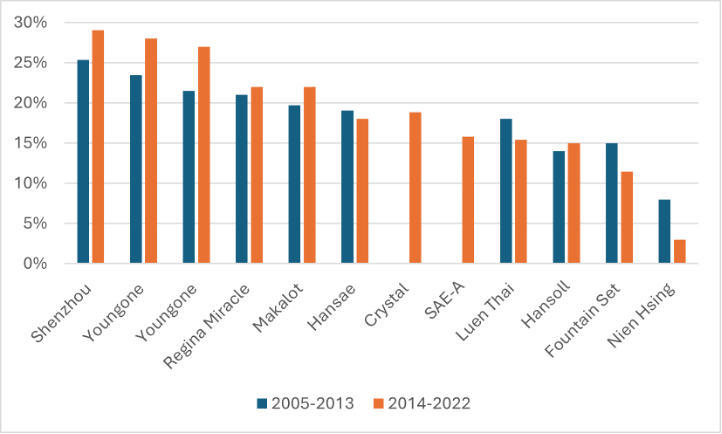
At the same time, the value capture among the largest apparel suppliers globally varies substantially: Figure 1 illustrates the gross profit margins for 12 publicly listed top apparel suppliers from the mid-2000s to the early 2020s. Three firms in particular – Shenzhou, Eclat, and Youngone – stand far above the rest. Not only do they consistently achieve substantially higher margins than their competitors, but since the 2010s their profitability has continued to climb, even as margins for most other suppliers have stagnated or declined. This creates an empirical puzzle: how do some apparel suppliers manage to escape the “supplier squeeze”?

Figure 1.  Annual gross profit margin (%) of giant apparel suppliers, 2005-2022

We solve this puzzle in a new article on ‘Rethinking economic upgrading in apparel GVCs: Value capture through strategic partnerships in product innovation cycles’. The article traces how ‘giant apparel contract manufacturers’ from Hong Kong, South Korea, Taiwan, Sri Lanka, and China have sought to capture more value over the past 25 years. It shows that even among the largest suppliers globally, only few suppliers have been able to extract concession on profit sharing from fashion brands and retailers. They do so by entering strategic partnerships with lead firms operating within what we call product innovation cycles.

Product innovation cycles are time-specific end-market dynamics in which lead firms temporarily escape competition with other lead firms by pioneering new products characterized by rapid growth and higher profit margins. To commercialize these products, fashion brands and retailers require suppliers with specialized manufacturing capabilities. Entering such strategic partnerships requires building specialized complementary assets such as advanced synthetic fabric capabilities. Strategic partnerships tend to be short-lived. They end once the lead firms (or the suppliers themselves) are emulated by competitors with the same capabilities. Thus, economic upgrading (understood as capturing more value along the chain) is only a transient condition that must be continuously renewed through new strategic partnerships.

Felix Maile is a doctoral researcher in development economics at the University of Vienna.

Lindsay Whitfield is Professor for Business and Development at Copenhagen Business School.

Read more in our new Blog Post and in our new open access paper ‘Rethinking economic upgrading in apparel GVCs: Value capture through strategic partnerships in product innovation cycles’.

Radiance in the Temple: The Mass of Las Auténticas and the Indigenous Disobedience of the Gender Binary

30 December 2025

By Jacobo Ramírez

Juchitán de Zaragoza, November 16, 2025

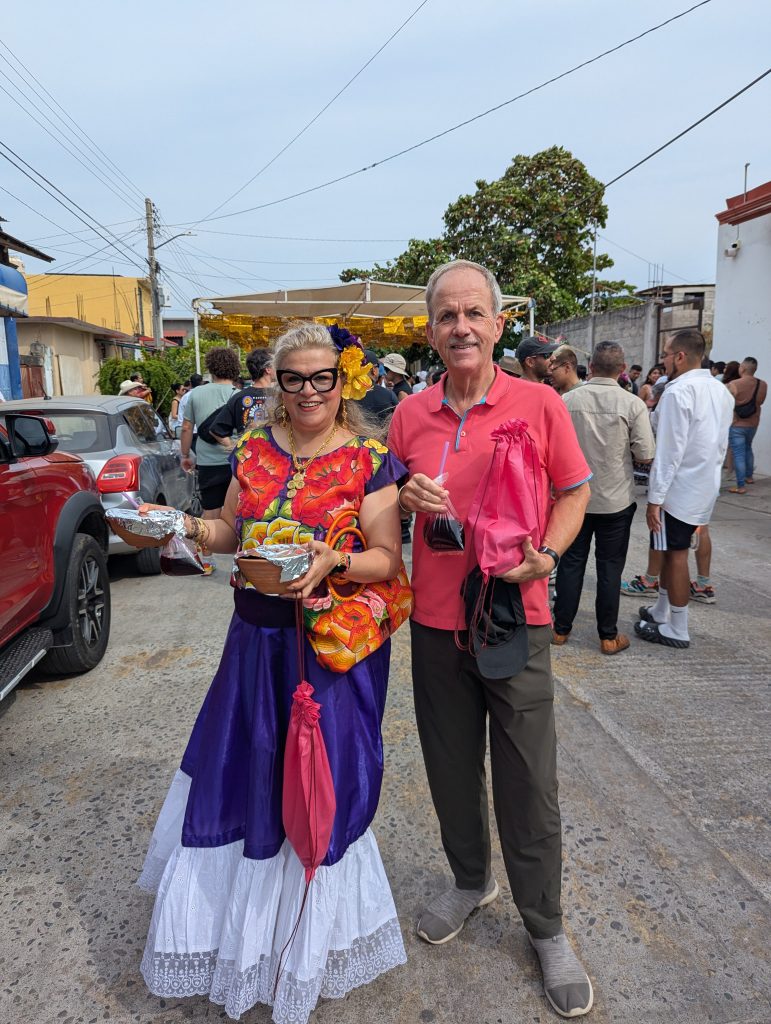
I grew up hearing that the Isthmus of Tehuantepec is a land of strong winds and even stronger wills. That idea always felt true, but only in recent years have I understood that this strength lives not only in the Zapotec history of territorial defense: it also lives in the bodies and lives of those who challenge, every day, the limits imposed by coloniality. Among them are the muxes.

When I arrived in Juchitán to accompany the 50th anniversary of Las Auténticas Intrépidas Buscadoras del Peligro, I understood that muxeidad is not just an identity category: it is a way of walking through the world, grounded in relationships with community, memory, ritual, and territory. Muxes inhabit a social and spiritual space shaped by Zapotec cosmology and by the colonial wounds that attempted to silence the gender plurality that existed long before evangelization.

Anthropological records speak of Aztec priests who wore clothing associated with another sex, Maya deities with multiple bodies, and ritual figures embodying duality and fertility. But those references, useful as they are, do not capture what it feels like to stand inside the church of San Vicente Ferrer and watch the muxes enter in their Tehuana dresses, carrying resplandores that illuminate centuries of resistance.

On that November 16th, as I watched them walk in, I realized I was witnessing something nearly impossible anywhere else in the world: a formal Catholic ritual dedicated explicitly to a third-gender community. An improbable gesture within the canon of a Church that has historically policed bodies and disciplined difference. Yet in Juchitán – as in so many Indigenous territories – imposition was never total. Here, Catholic faith was negotiated, reinterpreted, resisted, and at times transformed from within.

As the muxes advanced down the central aisle, accompanied by Maya representatives from Yucatán who also belong to Mesoamerican non-binary gender traditions, I felt history fold onto itself. It was as if precolonial traces and colonial wounds touched for a brief moment, revealing the persistence of worlds that never disappeared.

The priest spoke of justice, perseverance, and peace. He evoked the parable of the widow who insists before an indifferent judge, reminding us that those who seek justice often find doors closed. I heard his sermon not only as a spiritual message but as a living metaphor for what it means to be muxe in a country where gender, violence, and inequality intersect daily. At that altar, the Bible and everyday life seemed to speak to each other as equals.

After the Mass, a local band accompanied the procession toward the mayordoma’s home. The streets of Juchitán filled with music, sones, laughter, and steaming Oaxacan mole served in deep clay bowls. We were also offered fresh hibiscus water, and, as tradition holds, we gave a cash donation to the mayordoma – a communal gesture that reminds us that every celebration, every vela is sustained by an economy of care, daily labor, and collective commitment.

From my anthropological perspective, but also from my position as a person with Isthmus roots – child of parents born in this territory – returning to learn, I understood the political depth of that ritual. What happened that afternoon was not simply a Mass: it was a declaration. A statement that Indigenous worlds persist beyond attempts at colonial normalization. A living expression of ontological plurality. A bodily and spiritual resistance to the imposed gender binary.

For centuries, muxes have sustained community life in the Isthmus: they organize velas, care for their families, work in the markets, and keep alive the affective and ritual networks that uphold Zapotec existence. They are central to social reproduction, though their contributions rarely fit the economic and administrative categories defined by the State. Their labor is relational, situated, vital, and deeply feminized. And like so many forms of feminized labor, it is profoundly undervalued.

This Mass, this crossing of the Indigenous and the Catholic, of colonial wounds and everyday creativity, illuminates the contradictions that muxes inhabit without seeking to resolve them. From within ambivalence, they transform the systems that once excluded them. Through the aesthetic work of the body, they weave historical continuity. From the margins, they open futures.

I remember walking behind the procession, thinking about the way muxe testimonies overflow any fixed category. They do not seek to explain an identity; they assert a presence: they exist from within a world where ritual, care, and resistance are deeply intertwined. They told me – between laughter, makeup, pain, memories, and pride – that being muxe cannot be translated into Western categories; it is a relationship, a mode of community-making, a way of sustaining social life in the face of persistent coloniality.

This blog emerges from that moment: from a Mass that not only celebrated fifty years of history but revealed a continuity far older. From the understanding that muxes are neither folkloric symbols nor tourist postcards: they are living testimony of how Indigenous peoples create worlds at the margins, reinvent what they inherit, and challenge what was imposed upon them.

It is in that territory – fractured, vibrant, contradictory, and profoundly human – that the testimonies I share here are born. Each one is a situated intervention, a form of future-making that pushes its way through the winds of the Isthmus.

Final Note

The photographs included in this blog were taken by me, in an effort to capture not only the moments but also the strength and presence of those who made this celebration possible. Everyone portrayed granted verbal consent for the publication of these images, which aim to honor their stories and their journeys.

I extend my deep gratitude to Felina Santiago Valdivieso, Kika Godínez, Amurabi Méndez, Eduardo López Castillo, Patricia Castillo Luna, and Torben Laurén for their accompaniment, their care, and their supportive presence during the Vela of Las Auténticas Intrépidas Buscadoras del Peligro. Their support made possible not only this visual record but also the collective experience that sustains it.

Dr Jacobo Ramírez is an Associate Professor at the Centre for Business and Development Studies (CBDS) at Copenhagen Business School (CBS). His research focuses on organisational strategy in fragile states and other complex institutional environments shaped by security risks, displacement, and social unrest. His current work examines renewable energy investments in emerging markets. A Mexican–Danish dual national, Jacobo was born in Mexico and has lived and worked in Copenhagen since 2006.

Are shareholders the main beneficiaries of the global apparel industry?

29 April 2025

By Felix Maile and Cornelia Staritz

Who captures most of the profits created in the global apparel industry? When discussing distributive issues in apparel global value chains, scholars, policy makers and activists tend to focus on distributive struggles between five groups of actors: Consumers, fashion brands and retailers, manufacturers, workers, and states. Much of the analysis concludes that the rise of global value chains since the 1990s has enabled fashion brands and retailers (also known as ‘lead firms’) to capture juicy profits, and consumers to benefit from low-cost yet fashionable apparel products. By comparison, manufactures operate with razor thin margins and workers are exposed to harsh working conditions and low wages. States in turn earn limited taxes, given the investment and sourcing attraction policies that are common in special economic zones through which many supplier countries are integrated in the apparel industry. Yet, this analysis factors out one group of actors that is central in distributive matters: The shareholders that own the fashion brands and retailers and that have the claim on the profits that these lead firms generate. In this blog, we question the dominant perception of stock markets serving as the major ‘source of finance’ for apparel corporations to run their operations. Analyzing patterns of value creation and capture as well as corporate financing in the past 30 years, we come to a different conclusion: Stock markets barely contribute to apparel lead firms’ financing. Instead, apparel lead firms have funded stock markets, based on the profits that they generated vis-à-vis manufacturers and workers in their value chains.

In order to understand the distribution between shareholders and actors in global value chains, we draw on the conceptual and methodological toolbox of the corporate financialization literature. This strand of work emerged in the early 2000s, seeking to make sense of a shift in corporate strategy and management practice towards ‘shareholder value’ that had been underway since the 1980s: Financialization scholars have analyzed the balance sheets and income statements of major corporations in order to trace their sources of funding and understand how profits are created and allocated.

The seminal financialization literature of the early 2000s concluded that large firms had shifted their strategy from ‘retain and invest’ to ‘downsize and distribute’. What they meant was that formerly vertically-integrated firms shifted away from reinvesting profits in ‘productive’ means such as machinery, their workforce, or research and development. Instead, they outsourced less profitable parts of the value chain, often to firms based in lower-cost countries, and disbursed their profits to shareholders, either via dividend packages or so called ‘share buybacks’, in which companies repurchase their shares to boost their stock price. Financialization and globalization are therefore closely interrelated and reinforcing processes in the global economy.  

More recent contributions challenged this seminal literature by highlighting the dramatic acceleration of corporate financialization since the turn of the millennium, which changed its characteristics. Central to this were two processes: Globalization expanded on a different scale, with China’s WTO entry in 2001 providing low-cost global value chains centered around China as a backbone of accelerated outsourcing and offshoring, and shifts in financial markets created a low-interest rate environment. This changed the profit capacity of transnational corporations: Rather than ‘downsizing’, transnational corporations have merged, and monopolized global consumer markets both in high income and in emerging economies. Because their dominant position required fewer investments, and low interest rates during this period reduced financing costs, transnational corporations loaded incurring super profits on their shareholders.

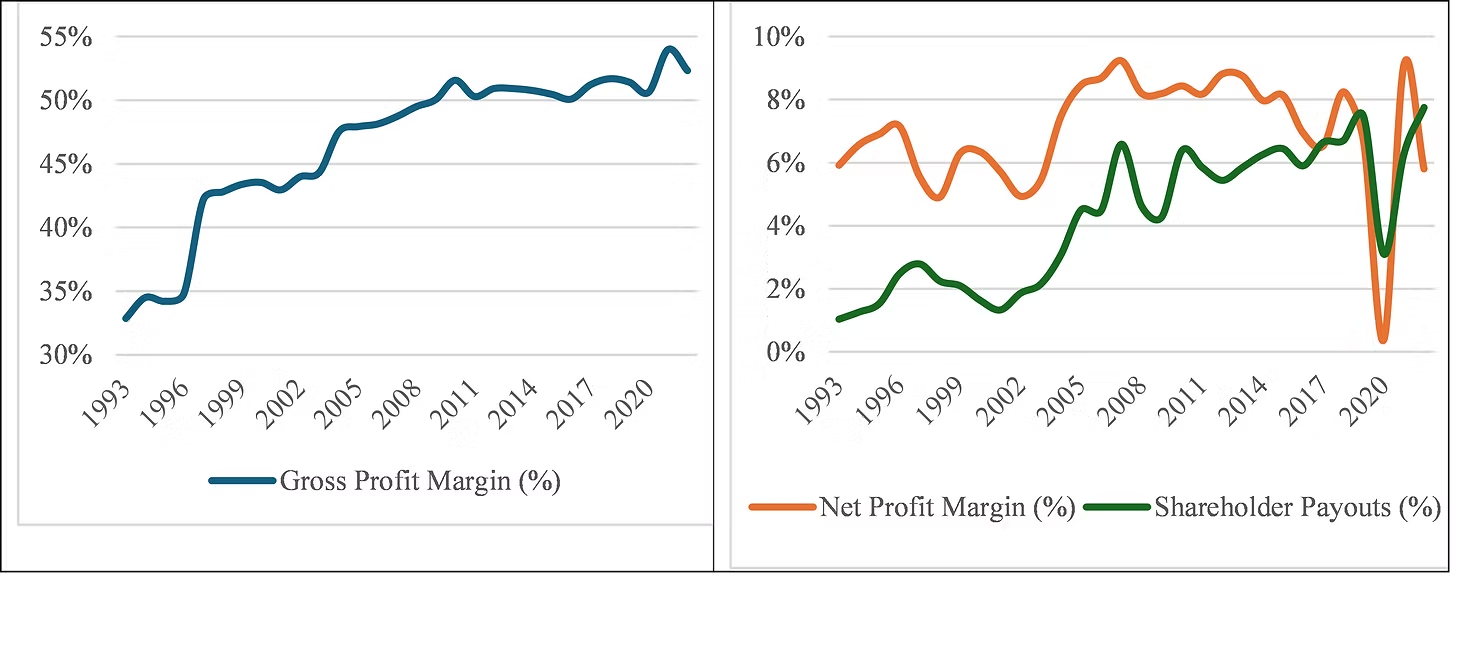
This is precisely what happened in the global apparel industry: Since the early 2000s, the ten largest apparel lead firms by annual turnover have quadrupled their revenues, by expanding in established end markets such as the US, Europe, and Japan, but especially in China. The liberalization of apparel trade as well as China’s entry into the WTO in 2001, which soon thereafter accounted for 40% of global apparel exports, put apparel lead firms in a structurally advantageous bargaining position vis-à-vis manufacturers, workers, and supplier countries. As Figure 1 (blue line) depicts, the hyper-competition in the supply base allowed these ten firms to boost profits realized on goods sourced (‘gross margin’) dramatically, from 33% in the mid-1990s to more than 50% by 2010. At the same time, net profits during the same period (orange line) barely exceeded 8%, because apparel lead firms made hefty expenses on their distribution network as well as in brand building and marketing, which is the essential competitive advantage for apparel corporations. However, an ever-larger chunk of these net profits was disbursed to shareholders: Expenses for dividends and share buybacks (‘shareholder payouts’, green line) rose dramatically, from 1,6 % of annual revenue in 2000 to 7,8% in 2022.

Figure 1: Gross profit margins (%), net profit margins (%) and shareholder payouts (%, on annual revenue), top 10 apparel lead firms
Note: The top ten apparel lead firms were selected based on their 2022 revenue. These firms include Nike, Inditex, Adidas, H&M, Fast Retailing, Gap, PVH, VF, Ralph Lauren, Levi’s. To control for global value chains dominated by apparel firms, we excluded high revenue brands that are part of multi-segment luxury conglomerates (LVMH, Kering) and wholesale retailers (Walmart, Target)

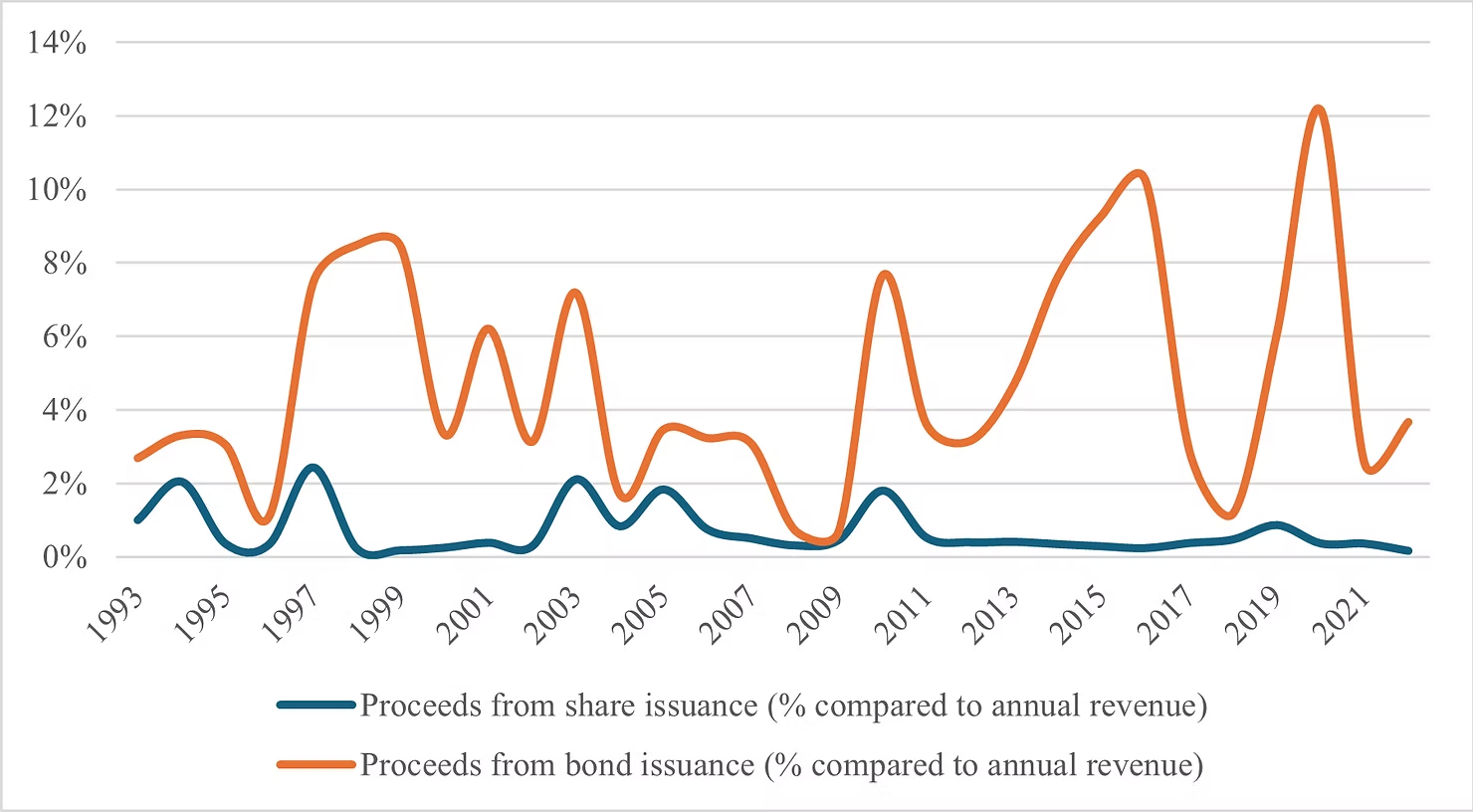
While apparel lead firms have distributed the bulk of their profits to shareholders, it is striking that they have barely used stock markets as a source of funding. Figure 2 shows that the annual proceeds lead firms generated from stock issuance since the early 1990s have been fairly meager (blue line), accounting for 0,7% when compared to annual revenues. Most apparel corporations had their public offering on stock markets during the 1970s to 1990s, through which they raised a few hundred million US dollars at the time. Afterwards, new share issuance was rather the exception than the norm. Once these firms turned global, the payouts to shareholders began to amount to several billion US dollars per year. By comparison, the central source of finance for apparel lead firms in the past 30 years have been bonds markets. Proceeds from corporate bonds accounted for 4,7% of revenue on average during that period (orange line), thus exceeding the funds secured from stock issuance by 7 times.

Figure 2: Proceeds generated from share issuance and bond issuance (%, compared to annual revenue)

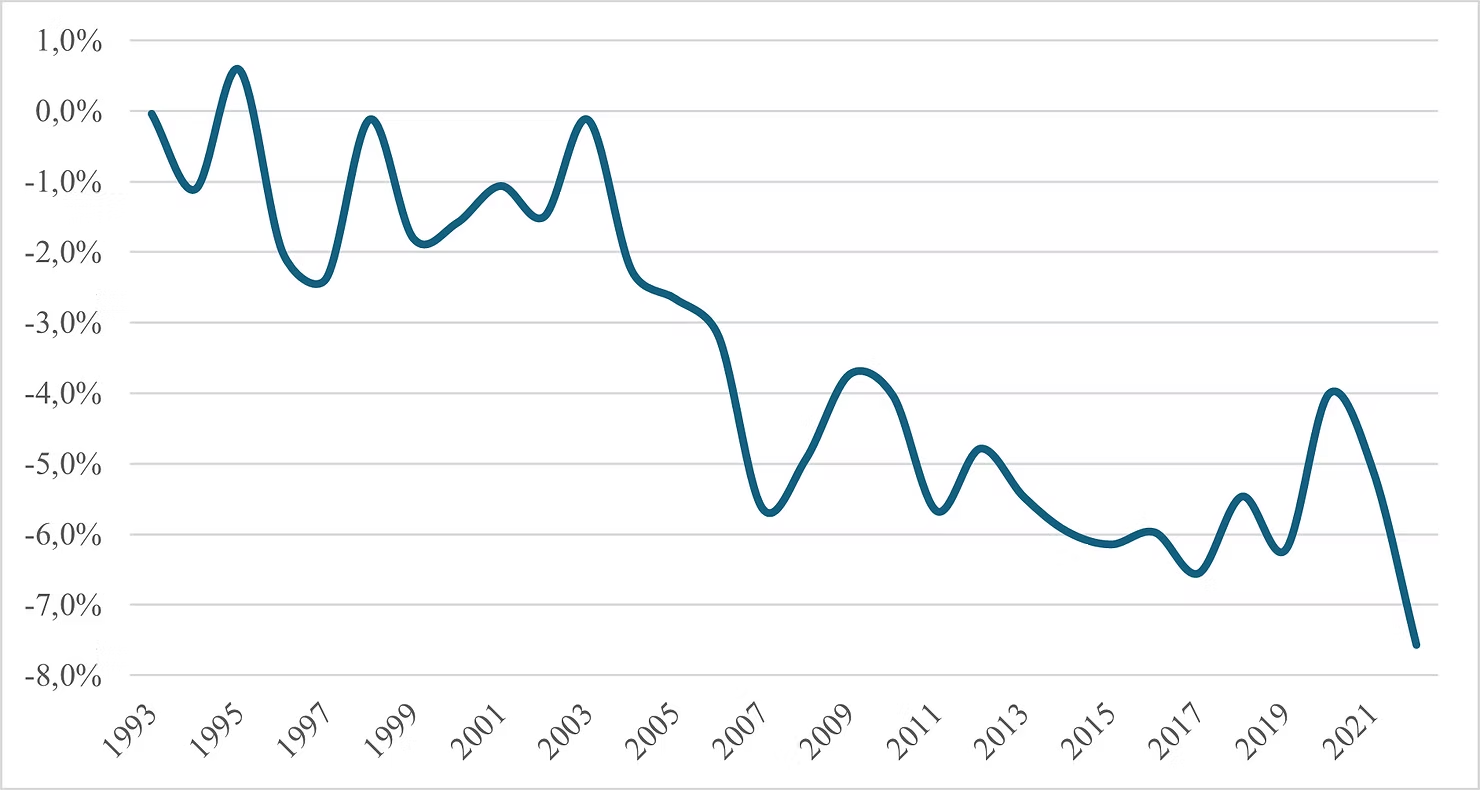
The distributive relationship between apparel lead firms and their shareholders thus turned into a one-way street. Since the mid-1990s, net financial flows from lead firms to stock markets have been negative for all financial years. By 2022, this net negative finance flow accounted for on average 7,8%, when measured against lead firms’ annual revenues.

Figure 3: Net financial flows between apparel lead firms and stock market (%, compared to annual revenue)
Note: Net financial flows are calculated by comparing annual stock issuance with annual shareholder payouts, benchmarked against firms’ revenues.

These results raise broader questions about the role of stock markets in global capitalism.   Stock markets perform an array of functions: They are an institution of corporate control. Corporations also make use of their own shares as a currency to pay for acquisitions of other firms, and to remunerate their top executives. Stock markets further serve as an institution for ‘firm creation’, because the outlook for an initial public offering acts as a magnet of funding for early stage firms. Finally, as the market turmoil in recent weeks has shown, stock markets have become the central global institution of wealth management, on which institutional investors such as insurances, pension, sovereign wealth funds, hedge funds, but also wealthy individuals and retail investors seek to optimize their investment portfolios. But counterintuitively, stock markets do not function as a significant source of finance for firms. Instead, major transnational corporations, with fashion brands and retailers as a prime example, channel the profits created in global value chains to their shareholders.

Understanding global distributional inequality thus requires linking value creation in globalized production with value capture in global financial markets. The starting point for this is to acknowledge and understand the role of financial markets and actors as one of the main beneficiaries of globalized production, how they impact the business and sourcing strategies of (lead) firms, and ultimately shape the value capture of governments, manufacturers and workers integrated into apparel global value chains.  

Felix Maile is a doctoral researcher in development economics at the University of Vienna.

Cornelia Staritz is Associate Professor in Development Economics at the Department of Development Studies at the University of Vienna.

This blog post has first been published here.

  • Page 1
  • Page 2
  • Page 3
  • Go to Next Page »

Copyright © 2026 · Copenhagen Business School

  • Accessibility Statement
  • Privacy Policy
  • Cookies