
By Ahaana Mahanti
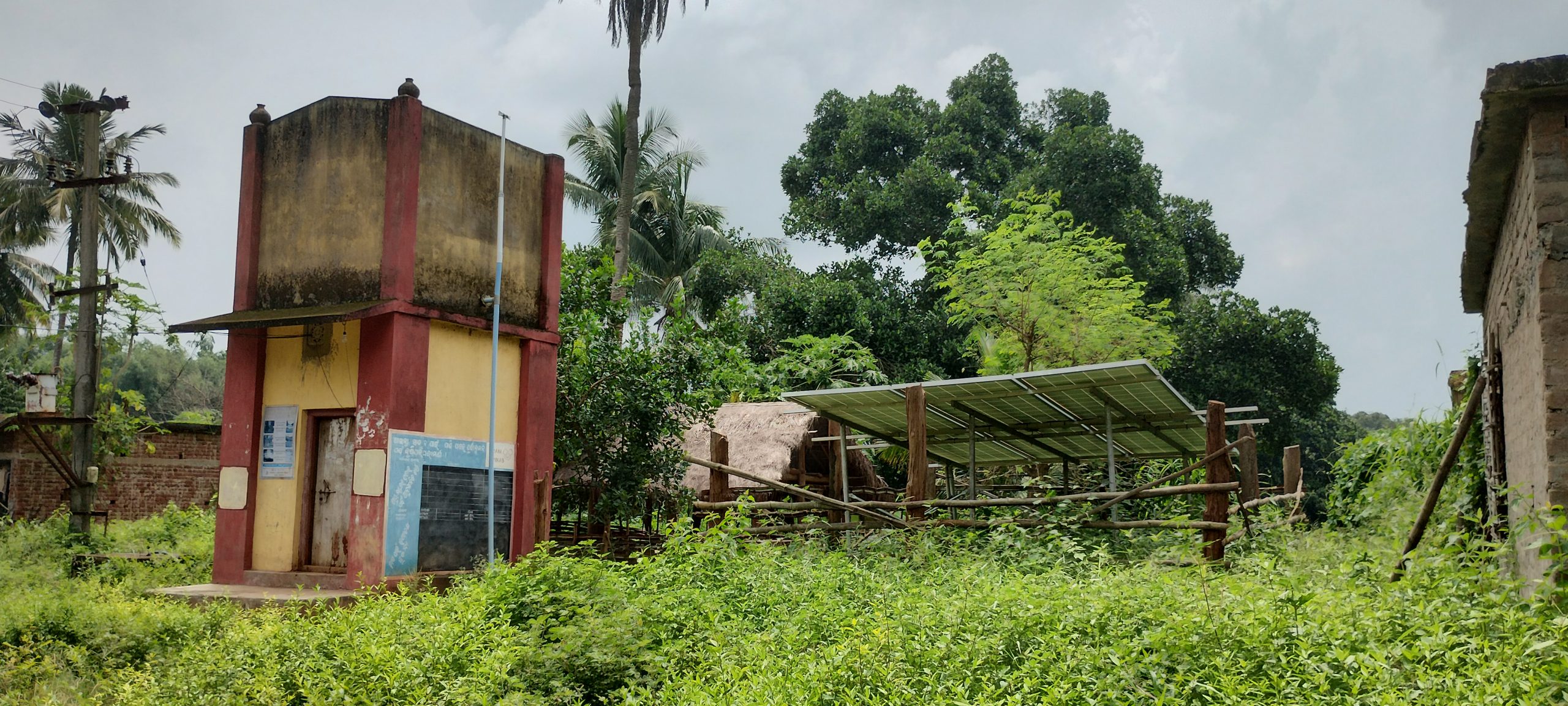
For governments, companies, and philanthropies, few things are as attractive as a well-designed cross-sector partnership (CSP), i.e., a collaborative arrangement between private, public, and civil society actors that aims for scalable solutions to development challenges. A successful pilot becomes the blueprint for regional, national, or even global expansion. Yet in the pursuit of scale, a critical question is often overlooked: does the solution still work when it travels?
CSPs are not synonymous with Corporate Social Responsibility (CSR), though CSR investment can be one of the funding mechanisms that initiates or sustains them. What distinguishes CSPs is their multi-actor character: donors, companies, NGOs, government agencies, and communities otherwise treated as beneficiaries such CSPs are designed to serve. Together, they co-govern and co-implement, each bringing different resources, accountabilities, and logics to the table.
My research follows a decade-long CSP, the India Water Project (IWP), which brought together the Poul Due Jensen Foundation (a Danish philanthropic foundation affiliated with pump manufacturer Grundfos), Sunlit Future (an Indian solar energy provider), state-level government missions, and nine local NGOs. The project deployed solar-powered pumps to provide safe drinking water to remote villages across eight Indian states. It was technologically sound, aligned with India’s Jal Jeevan Mission, a national initiative aimed at providing universal household drinking water access through piped connections, and implemented with the support of local NGOs. In theory, it had all the ingredients for successful replication.
Yet in practice, outcomes varied significantly across villages. In some places, women saved hours each day from not having to walk long distances to collect water, girls returned to school, and communities pooled funds to maintain and upgrade infrastructure. In others, pumps fell into disrepair, elite capture excluded marginalized households, and gender inequities persisted.
What explains this divergence? Replication is not neutral.
The Limits of “Plug-and-Play” CSP Implementation
CSPs, like many development interventions, are often treated as scalable templates. Identify a working model, standardise it, and roll it out. In socially stratified and institutionally fragmented contexts across much of the Global South, however, infrastructure alone does not determine outcomes. Local social relations and governance structures do.
A place-based approach is not new to the social sciences. Urban planners, human geographers, and community development scholars have long argued that interventions must be attuned to the specific material, relational, and institutional conditions of the places in which they are embedded. What my research contributes is an application of this insight to CSPs and SDG implementation in rural Global South contexts, where this kind of attentiveness has often been crowded out by donor pressures for speed, coverage, and standardisation.
In one village, the placement of a water tank triggered conflict because the local government (panchayat) demanded compensation for land despite already receiving funds from national water schemes. In another, women were discouraged from participating in governance committees despite being the primary users of water. A water pump does not function in isolation. It exists within a web of social norms, institutional relationships, and historical inequalities.
As one project leader from one of the partner NGOs explained: “You can’t just install the same pump and expect the same results. Caste dynamics, gender roles, local politics, and governance structures matter more than we know… every village is unique in that regard.”
The lesson is clear. Technology can enable access, but the spatial setting within which it is implemented determines whether that access becomes equitable and durable.
Communities First: Beyond Rhetoric, Toward Embedded Practice
Community-driven development is a widely used phrase, but implementation often falls short. Many NGOs and CSR initiatives outsource community mobilization to third-party contractors or rely on facilitators responsible for several villages at once. While efficient on paper, this approach often creates distance between projects and the communities they serve.
The most effective NGOs take a different approach. They treat community engagement not as a checkbox or a PR exercise but as infrastructure in its own right.
Consider Bala Vikasa, a Telangana-based NGO guided by a deceptively simple but powerful philosophy: build the community before building the project. They distinguish between “hardware” (physical infrastructure) and “software” (social infrastructure such as leadership development, inclusive governance, and community mobilization). Before laying a single pipe, Bala Vikasa invests ₹50,000 to ₹1,00,000 (approx. €500-€1,000) to convene the village, identify local leaders, and establish representative committees. This groundwork ensures that when the ₹5-10 lakh (approx. €5,000-€10,000) infrastructure project is implemented, the community sees it not as a handout but as their own. In one village, residents independently raised ₹2.5 lakh (approx. €2,300) to replace a damaged pump, a strong signal of local ownership and sustainability.
Bala Vikasa also evaluates outcomes using a Social Return on Investment (SROI) framework. A ₹3 lakh (approx. €2,800) investment in a village water purification plant generated an estimated ₹15 lakh (approx. €14,000) in annual household savings, i.e., a 5:1 return. The financial gains were significant, but the broader impacts extended beyond economics: improved health, higher school attendance, and restored dignity.
Unlocking Hidden Value: Community-Based Asset Management
Before launching new projects, Bala Vikasa promotes what it calls Community-Based Asset Management. The premise is simple: before importing resources, identify and leverage what already exists in the village.
Community members are encouraged to examine their surroundings not as aid recipients but as problem-solvers and stewards. They are asked to observe: What resources do we already have? What assets are underutilized? What solutions might come from within?
In one agricultural resilience program, farmers explored alternatives to expensive chemical fertilizers that were degrading soil and affecting health of the locals. The community walkthrough revealed overlooked resources such as cow dung, cow urine, tree leaves, buffalo milk, and ghee; ingredients historically used in organic farming practices but abandoned during the shift toward industrial agriculture. Through demonstrations and training, farmers learned to produce natural fertilizers using these materials. The results were tangible: increased yields, lower input costs, and improved market returns. What began with five farmers grew to more than 2,000, largely through knowledge sharing rather than external funding.
In Bala Vikasa’s water projects, villagers similarly mapped existing infrastructure such as abandoned panchayat office buildings, unused school structures, and defunct storage facilities. Instead of constructing new plants on contested land, communities repurposed existing spaces, reducing costs and avoiding disputes.
As the NGO’s Executive Director explained, “when everything is given freely, nothing is truly valued. But when communities co-invest through land, labor, or leadership, they develop a stronger stake in sustaining the outcomes.”
This approach reflects a philosophy of embedded empowerment. Development becomes a collaborative enterprise rather than a technical fix. It demands attitudinal shifts from dependency to agency, from waiting for help to unlocking what is already in hand. In the long run, this kind of asset-first thinking helps address the larger, interconnected web of social and environmental vulnerabilities, from food insecurity and income volatility to gender exclusion and infrastructure decay. Community-based asset management doesn’t just prepare people for a project, it prepares them to own and evolve it.
A Place-based Approach to Governance: What CSP Partners Need to Understand
A place-based approach goes beyond mapping geography. It requires understanding how local power structures operate: who decides, who is excluded, how conflicts are managed, and how formal and informal institutions interact (Shrivastava & Kennelly, 2013; Massey, 2004). This approach draws on decades of place-based thinking in urban planning and human geography, bridging that knowledge into the domain of cross-sector partnerships and SDG implementation. The most effective NGOs (in terms of long-term project success) I studied created village-level committees with representation from women, youth, and marginalized castes. They aligned project timelines with panchayat meetings, integrated government funding from national schemes, and leveraged local schools and self-help groups for outreach. This hyperlocal orchestration isn’t slow or inefficient. It is what makes development durable.
Designing for Intergenerational Impact
Ultimately, the goal of any service delivery project CSP operating in remote, under-resourced areas must go beyond short-term access to infrastructure. It must address intergenerational poverty. Impact assessments must therefore go beyond counting taps installed or liters delivered. They should include indicators such as, aligned with SDGs 1-6 and 10:
• Time saved for women and girls, enabling education, rest, or income-generating activities
• Reduction in waterborne illnesses and healthcare costs
• Improved school attendance and reduced dropout rates among adolescent girls
• Household nutrition and food security through kitchen gardens irrigated with surplus water
• Women’s participation in leadership and decision-making, tracked over time.
These indicators reflect not just access, but agency, a far stronger predictor of long-term development outcomes. Dignity, durability, and agency are not standalone SDG targets, but they are precisely what determines whether CSP investment in infrastructure generates sustained change or deferred fragility.
What This Means for Donors, NGOs, and Government Agencies
If there’s one lesson from this work, it is that durability requires rethinking the very logic of scale.
For donors and philanthropic foundations:
• Treat place sensitivity as a design requirement, not an ex-post adjustment. Funding decisions should incorporate spatial diagnostics: settlement patterns, infrastructural deficits, social stratification, and local governance capacity.
• Resource the brokering work. Facilitation, dispute resolution, governance formation, and ongoing community follow-up are ethical infrastructure. Without sustained funding for this work, CSPs risk producing technically functional but socially fragile assets.
• Rethink evaluation regimes. Integrate justice-oriented indicators such as who participates in governance, how grievances are resolved, whether marginalised hamlets benefit equitably – alongside conventional output metrics.
• Redefine success of CSPs. Ask: Have we reduced burdens? Increased agency? Shifted power? Increased choice?
For NGOs and implementing organisations:
• Understand that infrastructure delivery and governance formation cannot be separated. The durability of outcomes depends less on technical sophistication than on whether governance routines are locally legitimate and inclusive.
• Recognise that “community participation” is not a sufficient safeguard against exclusion. In stratified settings, participation must be actively designed, through gender-balanced committees, transparent financial rules, and mechanisms for voice from peripheral hamlets.
• Treat NGOs as strategic partners with governance intelligence, not project vendors. They often act as cultural translators, systems integrators, and informal policy brokers.
For government agencies:
• Recognise and institutionalise the governance-building role of embedded NGOs, rather than treating them solely as delivery contractors.
• Treat place sensitivity as a governance principle. Uniform templates risk flattening the socio-spatial differences that determine whether infrastructure is used, maintained, and governed equitably.
• Extend public accountability beyond asset creation to include distributive and procedural outcomes, i.e., who controls resources, whose grievances are heard, and who bears ongoing maintenance responsibilities.
Principles Travel Better Than Templates
What holds true for rural India applies across the Global South, in parts of Africa, Southeast Asia, and Latin America where inequality is entrenched, infrastructure is patchy, and governance is often contested. International NGOs and donor agencies must realize that scaling interventions without adapting and reconfiguring them to the place can undermine their impact. What is needed is not solutions that scale but systems that adapt.
Place-based development may not lend itself to flashy dashboards or linear timelines. But it creates something far more valuable, and that is dignity, durability, and agency. These outcomes are largely absent from the SDG target framework, which is precisely what makes them worth naming: achieving the SDGs in marginalized contexts requires these additional dimensions alongside conventional metrics.
And ultimately, that is what development should achieve.
Ahaana Mahanti is a PhD Fellow at CBS investigating how cross-sector partnership models operate on the ground in marginalized settings, specifically within the empirical context of water governance in rural Indian communities.