

The seminar series What Is a Just Green Transition? sought to foster debate aimed at finding solutions that move beyond black-and-white positions. It provided a platform for discussing the complexities of how democratic politics shape the speed, distribution, and societal acceptance of the green transition across different geographic scales, while also examining how economic strategies centered on competing in new green technologies are reshaping global capitalism.
The series placed particular emphasis on the relationship between democratic politics and economic objectives within the green transition. Organized around five thematic sessions, it invited panellists to discuss and debate a set of key political and economic questions surrounding climate change, industrial policy, and global transformation.
The series was hosted by Professor Lindsay Whitfield of Copenhagen Business School (CBS), Director of the Observatory for Just Green Transitions, and co-organized by the CEU Democracy Institute and the Centre for Business and Development Studies (CBDS) at CBS.
The Observatory for Just Green Transitions brings together researchers and institutions from across Europe and beyond, including Central European University in Budapest and Copenhagen Business School, to study the political, socio-economic, and geopolitical dimensions of contemporary green transformations.
1. Is Green Capitalism an Oxymoron?
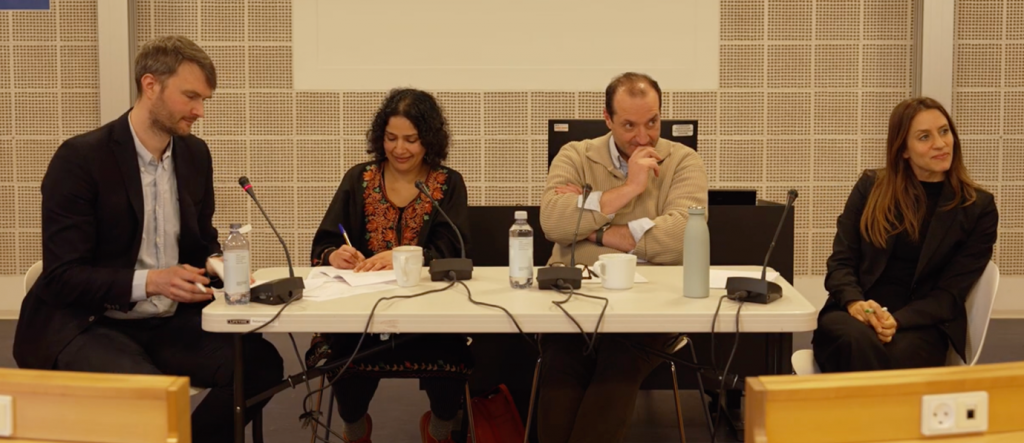
The first seminar brought together contributors to the 2025 Forum in Development and Change on The Political Economy of Renewables Capitalism to debate three different perspectives on the greening of capitalism. One perspective argued that capitalism has historically been inseparably linked to fossil fuels and therefore cannot truly be “greened.” A second perspective suggested that economic, environmental, and social justice can only be achieved if societies move beyond the pursuit of continuous economic growth, regardless of the underlying energy mix. A third perspective focused on whether the green transition can instead be leveraged to create more socially just and environmentally sustainable capitalist economies.
Participants:
Murat Arsel, International Institute of Social Studies of Erasmus University Rotterdam
Nikita Sud, University of Oxford
Lindsay Whitfield, Copenhagen Business School
Moderator:
Jacob Hasselbach, Copenhagen Business School
Watch the recording here
2. Does the Green Transition Open Pathways Out of the Periphery?
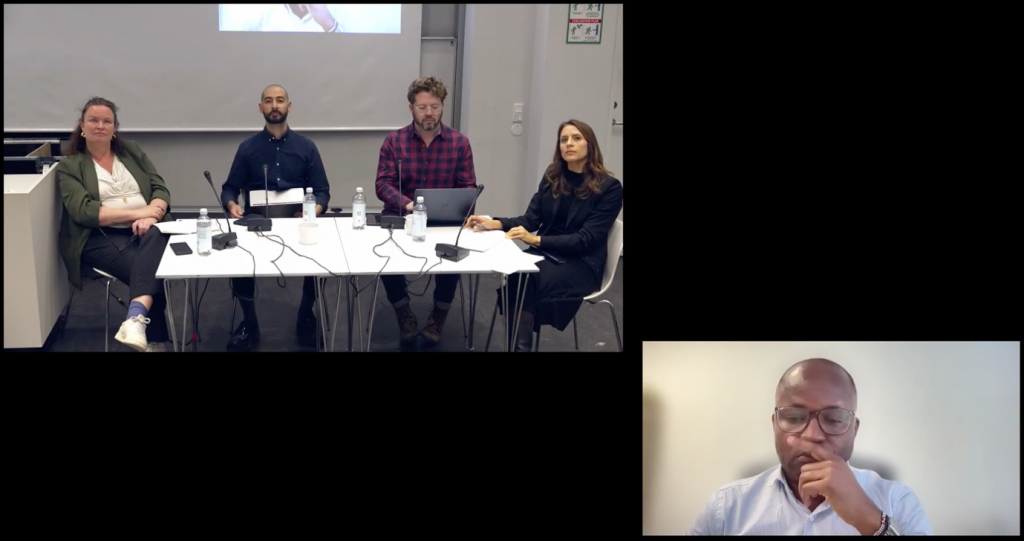
The second seminar focused on debates surrounding whether the green transition can truly be considered a “just” transition. One perspective argued that green energy transitions deepen polarization and dependency between wealthy and poorer countries, with decarbonization in richer economies taking place at the cost of intensified social and environmental exploitation in peripheral regions.
An opposing perspective argued that countries in the Global South may be able to strategically position themselves within new energy infrastructures and cleantech value chains. From this perspective, the green transition could create opportunities for latecomer economies to become first or fast movers in emerging green industries.
The discussion therefore moved beyond asking whether the green transition is “just” and instead explored whether it has the potential to reshape productive relations and hierarchies within global capitalism.
Participants:
Ilias Alami, University of Cambridge
Aldo Madariaga, Diego Portales University, Chile
Elvis Alvenyo, University of Johannesburg (online)
Stine Haakonsson, Copenhagen Business School
Moderator:
Lindsay Whitfield, Copenhagen Business School
Watch the recording here
3. How Do We Square Democratic Rights with Green Industrial Policies?
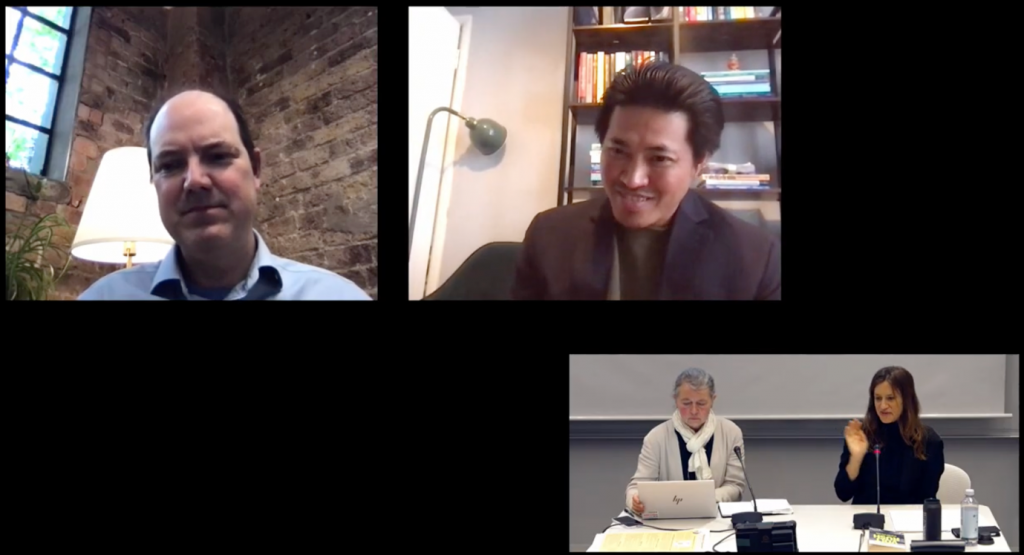
The third seminar examined the tensions surrounding critical raw materials in the context of the global energy transition. While the transition from fossil fuels to renewable energy and increased electrification is widely regarded as necessary to address the climate crisis, renewable energy systems, batteries, and electromobility technologies require growing amounts of critical minerals.
The extraction of these raw materials often has significant environmental, social, and economic consequences for local communities. At the same time, geopolitical competition is increasingly shaping the global energy transition. As the rivalry between the United States and China intensifies, securing access to critical minerals has become a major policy priority.
The seminar explored how industrial policy has emerged in both mineral-producing and mineral-consuming countries in response to growing uncertainty, supply risks, and demands for economic sovereignty, while also debating the tensions and contradictions linked to critical raw materials.
Participants:
Jojo Nem Singh, University of Sussex and ERC project on Green Industrial Policy in the Age of Rare Metals
Henry Sanderson, author of Volt Rush
Karin Buhmann, Copenhagen Business School and project leader of Frontiers of Natural Resource and Sustainability Governance for a Just Green Transition
Moderator:
Lindsay Whitfield, Copenhagen Business School
Watch the recording here
4. In Conversation with Andreas Malm on The Long Heat: Climate Politics When It’s Too Late
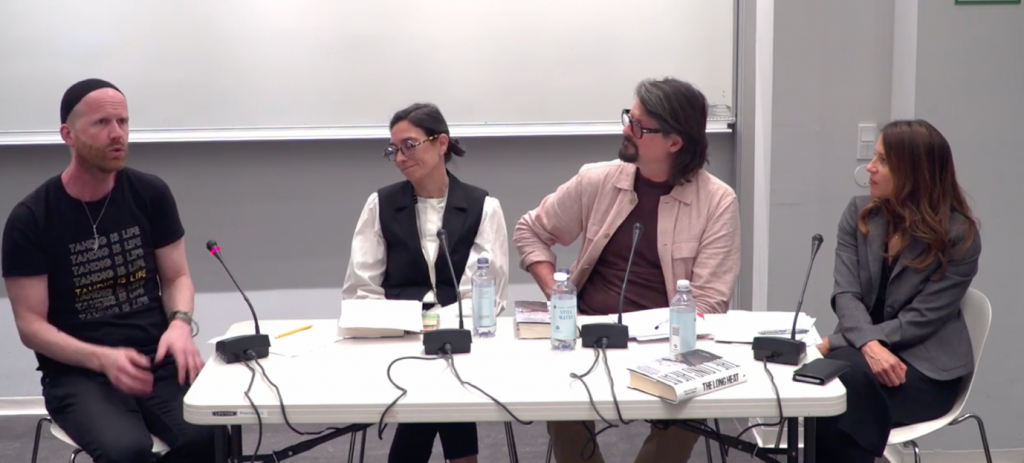
The fourth seminar focused on Andreas Malm’s book The Long Heat and the political implications of surpassing the climate thresholds established in the Paris Agreement. As global warming moves beyond the 1.5°C limit – and potentially toward 2°C – the discussion addressed what climate politics may look like in a context where mitigation efforts are increasingly accompanied by adaptation strategies and technological interventions.
The seminar explored proposals aimed at reducing future warming through carbon removal technologies or solar geoengineering, while also emphasizing Malm’s argument that no technological solution can absolve humanity of responsibility toward the planet and toward one another.
Following Malm’s presentation, the panel discussed what a climate revolution might look like across the Global North and South, and whether there remains space for a leftist and democratic global climate movement amid growing far-right resistance to environmental politics.
Participants:
Andreas Malm, University of Lund
Stefano Ponte, Copenhagen Business School
Isabel Froes, Copenhagen Business School
Moderator:
Lindsay Whitfield, Copenhagen Business School
Watch the recording here
5. Can Developmental Environmentalism Be Democratic?
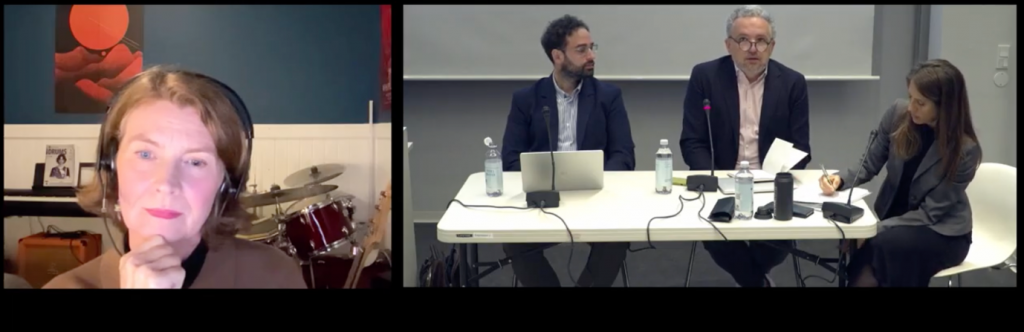
The final seminar examined whether developmental environmentalism can exist within democratic political systems. The discussion began from the observation that the difficulties democratic governments face in confronting fossil fuel interests have renewed interest in authoritarian environmentalism as a possible alternative.
At the same time, the seminar questioned whether the distinction between democratic and authoritarian systems is the key variable in driving green transitions. Drawing on examples from China and South Korea, the discussion explored how efforts to move away from fossil fuels are shaped by a combination of economic goals, technological competition, geopolitical concerns over energy dependence, and political legitimacy linked to pollution and environmental degradation.
The seminar debated whether developmental environmentalism is ultimately driven less by regime type and more by broader questions of political legitimacy, while comparing perspectives from Europe and Asia.
Participants:
Donato di Carlo, London School of Economics and Political Science
Elizabeth Thurbon, UNSW Sydney (online)
Cornel Ban, Copenhagen Business School
Moderator:
Lindsay Whitfield, Copenhagen Business School
Watch the recording here
Lindsay Whitfield is Professor for Business and Development at Copenhagen Business School.