• Skip to primary navigation
  • Skip to main content

← cbs.dk

CBDS

CBDS

Business in Development Studies

  • Home
  • Blogs
    • Corporate Social Responsibility
    • Critical Debates
    • Entrepreneurship 
    • Global Value Chains
    • Green Transition
    • Industrialization
    • Humanitarianism
  • Podcasts
  • Contact
  • Show Search
Hide Search

Corporate Social Responsibility

Contested Sustainability in Tanzania: The Political Ecology of Conservation and Development

22 November 2021

By Stefano Ponte, Christine Noe, Dan Brockington, Opportuna Kweka, Rasul Ahmed Minja, Robert Katikiro, Faraja Namkesa, Mette Fog Olwig, Pilly Silvano, Ruth John, Kelvin Kamde, Lasse Folke Henriksen and Caleb Gallemore

The issue

New and more complex partnerships are emerging to address the sustainability of natural resource use in the Global South. These partnerships variously link donors, governments, community organizations, NGOs, firms, consultancies, certification agencies and other intermediaries. High expectations and many resources have been invested in these initiatives. Yet, we still do not know whether more sophisticated organizational structures, more stakeholders involved, denser social networks and more advanced participatory processes have delivered better sustainability outcomes, and if so, in what sectors and under what circumstances.

The research project

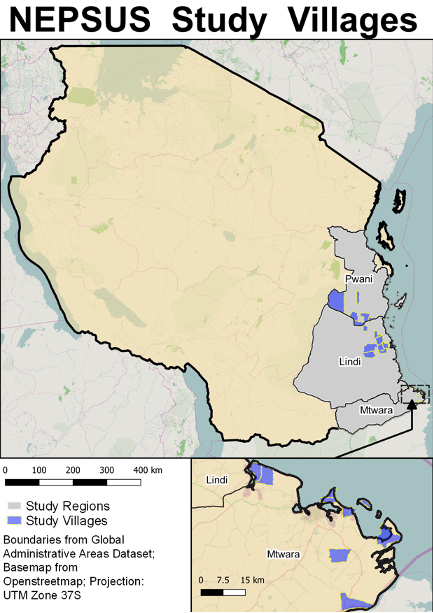
To fill this knowledge gap, the collective research project New Partnerships for Sustainability (NEPSUS), funded by FFU [1], assembled a multidisciplinary team to analyse sustainability partnerships that seek to combine conservation and development objectives in three key natural resource sectors in southeast Tanzania: wildlife, forestry and coastal resources. Researchers from Copenhagen Business School, the University of Dar es Salaam, the University of Sheffield and Roskilde University undertook five years of research, which involved carrying out a total of 331 key informant interviews, 81 focus group discussions, a survey with 1019 respondents, participant observation, and the collection of secondary documents, statistics, remote sensing and social network data.

In each of these sectors, we assessed whether co-management with local communities and private and civil society actors, and putatively more participatory processes in the governance of natural resources, result in positive environmental outcomes and improved livelihoods. We compared institutionally ‘more complex’ partnerships to relatively ‘simpler’ (more traditional top-down and centralized) management systems – and to ‘control’ locations where there are no partnerships in place.
Source: NEPSUS

We also assessed network complexity – as actors can use social networks to share their experiences, values, interests, knowledge and resources, but also to facilitate resource exchange and handle possible tensions. At the same time, networks may survive only when the most powerful and influential members of a partnership keep them alive, thus possibly reinforcing existing power imbalances. Our interest was to assess whether partnership complexity (in its institutional and network aspects) affects the ability to deliver sustainability outcomes.
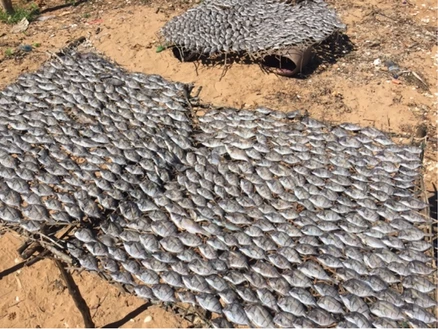
Photo credit: Stefano Ponte

Main findings

Legitimacy

Despite deliberate, evolving and persuasive efforts to raise awareness on the relevant rules and regulations, sustainability partnerships have struggled to gain and maintain legitimacy. Local communities are yet to perceive these partnerships as responsive, accountable and trustworthy arrangements that strike the requisite balance between community welfare and conservation goals.

Communities living in forestry sites perceived relatively higher levels of socio-economic and environmental outcomes accruing from new partnerships than their counterparts in wildlife and coastal resource sites. Lack of material incentives in wildlife partnerships and coastal partnerships limited their legitimacy in the eyes of local communities. Fishers and consumers of bush meat were affected by access restrictions, and alternative livelihood activities failed – or their benefits went to a small number of wealthy investors.

Complexity

We expected network complexity to correlate positively with institutional complexity, as the latter often entails participation of, and coordination between, a wide set of stakeholders. We found that there is a statistical association between these two dimensions (although it is highly sector-dependent), and that the building of more complex networks tends to predate the joining of more complex institutional governance forms. We interpret this as an indication that network building needs to be part of the initiation process of these partnerships.
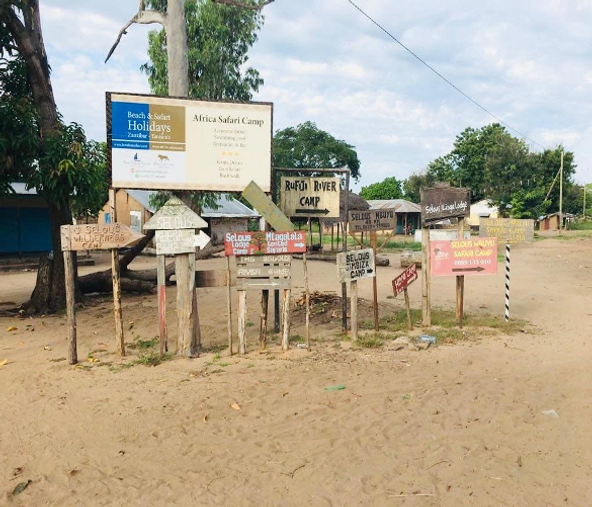
Photo credit: Ruth John

Environmental impacts

The analysis of our remote sensing data suggests that there is a positive relationship between a higher degree of both institutional and network complexity and the maintenance of forest cover (in relation to forestry, wildlife habitats, and mangroves). However, we found no consistent relationships between either form of complexity and the perceptions by survey respondents on local environmental change.

These findings indicate that there is some potential for (institutional and network) ‘more complex’ forms of sustainability partnership to support effective natural resource management. But institutional complexity does not simply emerge on its own. It must often be deliberately constructed and maintained and it involves previous work building complex networks.

Photo credit: Stefano Ponte

Impacts on livelihoods

Most people in the study sites we researched are farmers. Their livelihoods will improve to the extent that their farming revenues increase, and this happens mainly in relation to improved transport arrangements and farm-gate prices. New sustainability partnerships need to support farming activities if they are to bring prosperity. New partnerships on sustainability matter. They can make laws more just and fairer. They can introduce new business opportunities. They can safeguard natural resources more effectively. But they are not likely to be engines of large-scale prosperity of agricultural communities.

Photo credit: NEPSUS

Cultivating Partnerships

Instead of decentralization, we are witnessing accountability transfers that move obligations to local authorities without sufficient resources allocated to them to carry out their tasks. In the contexts we examined in southeast Tanzania, we observed a multiplication in the number and variety of actors engaged in sustainability partnerships. These actors often represent different interests, express different world views and bring with them specific hopes, expectations and claims. Smaller and weaker actors – especially those who do not have capacity, organizational skills, and resources to participate as equals in partnerships – have been marginalized in decision-making.

Photo credit: Stefano Ponte

We also see that the functional quality of sustainability partnerships in Tanzania depends on how they are embedded in networks of actors and institutions. To some extent, we have shown that social networks can act as potentially positive mediators of collective action coordination and collective learning processes.

Photo credit: Stefano Ponte

Sustainability partnerships have been more inclined towards the provision of training on conservation issues than the development of alternative livelihood activities. As a result, they have had limited effects on socio-economic and livelihood outcomes, especially at the household level. They have thus failed to strike a balance of conservation and socio-economic outcomes, with the partial exception of community-based forest management. This has culminated into significant levels of community dissatisfaction with their performance.

Policy recommendations

1) Local community governance needs to be strengthened to improve a sense of ownership and increase cooperation and trust.

2) The income accruing from sustainabitlity partnership activities need to be distributed evenly and in a transparent manner, no matter how small.

3) Duplication and unclear division of labour among different actors and jurisdictions need to be addressed.

4) Long-term consistent financial support is essential.

5) The government and collaborating actors should provide clear economic incentives and support community-based enterprises.

6) When access to resources is tightened, it is essential that alternative sources of livelihood that make sense to local communities are facilitated.

7) Efforts should be made to facilitate contacts between local communities and other key actors before the establishment of sustainability partnerships and maintained during their operation.

For more information, see www.nepsus.info

Keep an eye open for the forthcoming open-access book: Stefano Ponte, Christine Noe and Dan Brockington (eds) Contested Sustainability: The Political Ecology of Conservation and Development in Tanzania. James Currey.

[1] The Consultative Research Committee for Development Research (FFU) is a programme committee that advises the Ministry of Foreign Affairs of Denmark regarding Danida’s support to development research.


Businesses are finally committing to protecting forests – but how are local livelihoods affected?

9 February 2021

By Eirik Veggeberg, Izabela Delabre, and Kristjan Jespersen

The private sector is becoming increasingly vocal in its efforts to reduce deforestation. The last decade has seen a number of major firms making zero-deforestation commitments (ZDCs); pledging to eliminate deforestation in their supply chains, including Nestlé, Cargill, Unilever and Mondelez International. The exact contents of ZDCs vary, from strict zero gross deforestation commitments as implemented by Nestlé, to the more flexible zero net deforestation commitments of Unilever. Many corporations further include policies for social sustainability, such as labour standards (Mondelez, Nestlé), land rights (Nestlé, Unilever) and community consultation and inclusion (Cargill, Unilever). Due in part to their recency, our knowledge on the topic of ZDCs is limited, and there is much to learn about their effects on both forests and people.

What do we know about ZDCs?

The private sector deforestation movement started gaining traction following the ‘success story’ of the Brazilian Soy Moratorium, to which significant deforestation reductions were attributed. However, recent developments suggest that the intervention merely displaced the environmental destruction to the Cerrado savanna, with subsequent environmental costs potentially outweighing the conservation value of the initial deforestation reduction. Similar findings elsewhere induce scepticism about the capacity of supply chain initiatives to give rise to positive change. Despite this, ZDCs are perceived favourably by scholars and environmental groups alike – encouraged as being a (small) step in the right direction.

The efficacy of ZDCs in reducing deforestation is widely examined in academic research, however, little is known about the impacts of ZDCs on local income and livelihoods. This is an important gap in our understanding given the prevalence of ZDCs, and the potential challenges and opportunities they foster for more sustainable and equitable environmental governance. Without more scholarship examining the capacity of zero deforestation pledges to drive positive change and mitigate social harm, there is a danger that they may fail to address the complex problem of deforestation, marginalise communities, and delegitimise other forms of governance that could lead to more positive outcomes. This article expresses numerous concerns about the impacts ZDCs may have on local income and livelihoods.

Selection biases

Firstly, there is a risk that the producers participating in ZDCs are the “low-hanging fruit”. This is prevalent in the adoption of certification schemes and sustainability standards, where participation has been found highly biased toward producers who are already compliant, or close to complying due to prior deforestation, as well as those sufficiently wealthy to afford the price of adoption and implementation. Biases in ZDC participation could contribute to worsening existing inequalities, excluding poorer farmers and entrenching the position of wealthier ones.

While ZDC implementation strategies greatly vary, the exclusion of non-compliant actors is not rare – Nestlé openly commits to such practices. This may be perceived as a sign of loyalty to sustainability, however, paired with selection biases found in other sustainability schemes and initiatives, it anchors the fear that the implementation of ZDC could aggravate local income inequalities and harm poorer stakeholders; perversely rewarding farmers who have obtained land through past deforestation, whilst punishing those who have not.

The price of sustainability

Secondly, for the implementation of ZDC to be considered sustainable and equitable, it is imperative that adequate cost-sharing processes are implemented within supply chains. Learning from the oil palm sector, it is likely that farmers will be held disproportionately responsible for ensuring sustainable production. Farmers implementing ZDC risk losing out on income as buyers exhibit little willingness to compensate producers for operating sustainably. This fear was reiterated by interviewees working on ZDC implementation, as the majority felt corporations were unwilling to pay the price of their sustainability initiatives. A consulted economist further suggested that local suppliers may be caught in a poverty trap as a result of ZDCs restricting them from expanding their agricultural frontier. Businesses’ reluctance to pay for the implementation of sustainable practices risks the income and livelihoods of local actors – potentially encouraging the illegal encroachment of forests.

Interviews with sustainability experts shed light on further negative impacts supply chain sustainability initiatives may have on local suppliers. One interviewee spoke of an indigenous community settled in the Peruvian Amazon that had developed good contact with local NGOs as well as international corporations. The interviewee described them as skilled at diversifying their sources of income: cocoa, timber – even starting to venture into tourism. However, when the pandemic hit, the community was one of the first to request emergency food supplies. The indigenous community had been left exposed in times of crisis in part due to specialisation and involvement with the private sector, which eroded their resilience. Such scenarios evince that still very little is known of the wider and longer-term social impacts of private sector sustainability governance through ZDC implementation. Similarly, based on field research from the Peruvian Amazon, one consultant worried that farmers who swap their crop out for the one pushed by initiatives may actually see their income drop, as a lack of experience with the crop leaves them more vulnerable to potential challenges such as pests and growth issues related to poor land suitability.

What to do?

There are numerous ways in which businesses could adapt their initiatives and implementation strategies to minimise the risks discussed above. Firstly, thorough jurisdictional approaches could help avert some of the potential dangers faced by local communities as a result of ZDC implementation. Incorporating regional governments, NGOs as well as local actors and communities could help combat selection biases by providing support and incentives for all local actors and communities to partake and benefit from the initiatives. More cooperation at the local level may also help minimise worries that actors may have about altering their crop to fit the initiatives. Further, it is crucial that initiatives are developed so as to suit local or regional contexts. One interviewee stated that currently this is not the case, and that regional differences and complexities often go overlooked. It is not as simple so as to ‘copy and paste’ approaches between regions with the belief that “if it worked in Costa Rica, surely it will work in Peru”. The implementation of ZDCs must evolve to incorporate and encourage cooperation amongst a broader range of actors, and their contents require a great deal of flexibility to account for local differences and complexities.

Secondly, businesses need to show greater responsibility and willingness to partake in cost sharing decisions. It is currently too easy for firms to push full responsibility onto farmers. As highlighted by a chief sustainability officer, businesses still consider zero-deforestation policies efforts of charity and CSR, with very few integrating sustainability into their business model. Therefore, as long as environmental costs are not integrated into the price of goods, businesses will fail to prioritise sustainability over profits, and will be reluctant to pay for initiatives in an attempt to minimise their costs. Approaches to integrating externalities are heavily researched and must be more closely examined in relation to deforestation and ZDCs.

The aim of this article is not to discredit supply chain sustainability initiatives and ZDCs as legitimate instruments for reducing deforestation, or to expose them as inherently damaging to the incomes and livelihoods of local actors. Rather, it aims to shed light on ignored and potentially damaging unintended consequences ZDCs may have on local actors, with the intention of encouraging scholars and practitioners to explore this matter further. Empirical research on the implementation of ZDCs is needed to establish whether the aforementioned- and/or other effects are observed in practice, and if so, to what extent they can be attributed to existing ZDCs.

__________________________________________________________________________________

About the Authors

Eirik Ingwardo Veggeberg is a Junior Research Associate and final year Philosophy, Politics and Economics undergraduate at the University of Sussex. His current research project explores the effects supply chain sustainability initiatives have on local income and livelihoods in the Peruvian Amazon. Feel free to connect with Eirik on Linkedin.

Izabela Delabre is a Research Fellow at the University of Sussex, examining sustainable forest governance, sustainable production and consumption of food, and sustainability transformations. Izabela worked for the Business and Biodiversity Conservation Programme at the Zoological Society of London (ZSL) managing ZSL’s global oil palm work. Her PhD (Human Geography) examined the political ecology of participatory impact assessment practices in the context of the Roundtable on Sustainable Palm Oil (RSPO) in Indonesia and Malaysia.

Kristjan Jespersen is an Associate Professor at the Copenhagen Business School. He studies the growing development and management of Ecosystem Services in developing countries. Within the field, Kristjan focuses his attention on the institutional legitimacy of such initiatives and the overall compensation tools used to ensure compliance.

‘Not every time is the right time for real-time marketing’: Branding in the COVID-19 pandemic

11 September 2020

CBDS Research Briefing by Maha Rafi Atal and Lisa Ann Richey

Maha Rafi Atal is a postdoctoral research fellow at the Copenhagen Business School, where her research focuses on corporate power, corporate social responsibility and corporate influence in the media. She is a co- Investigator on the Commodifying Compassion research project. http://www.maha-rafi-atal.com

Lisa Ann Richey is Professor of Globalization at the Copenhagen Business School. She works in the areas of international aid and humanitarian politics, the aid business and commodification of causes. She is the principal investigator on the Commodifying Compassion research project. https://www.lisaannrichey.com

Colton Vond, “Obey Consumerism,” March 3, 2019. Licensed under Creative
Commons CC BY 2.0

Executive Summary

As the global Covid-19 pandemic spread through Europe and North America, companies raced to communicate how they were responding to the crisis. Advertising that focuses on a company’s response to humanitarian crises is hardly new. Every holiday season features a parade of brands touting their seasonal partnerships with charitable causes. Yet these exercises in “Covid-branding” struck a particular nerve with both consumers and media commentators because so many of the brands stuck to the same script. Quickly that script even became the subject of satire.

‘The hallmarks of the coronavirus ad are so consistent they could be generated by bots. They begin with eerie drone footage of empty streets, a shot of a child staring plaintively out the window and then — cue the upbeat musical key change — a medical worker peeling off a mask, a guy jamming on a home piano, maybe a deeply pregnant woman rubbing her belly as if summoning a genie from its bottle.’

Amanda Hess, The New York Times, May 22, 2020

These patterns are important. In the uncertain early weeks of the pandemic, as governments were still crafting their responses, the stories brands told played a role in shaping how the public made sense of the crisis. What kind of a crisis was it? What sort of solutions did it need? What role should business play in delivering them? Covid-branding offered answers to those questions.

In this briefing note, we present a preliminary analysis of Covid-branding by companies in Europe and North America during March and April 2020. Our analysis finds that messaging clustered clearly into two ways could engage: ‘Covid-helping’ and ‘Covid-coping.’ These messages of ‘managing the pandemic’ and ‘managing yourself’ frame the consumption of goods and services as a way that consumers can show they care, presenting shopping as a form of everyday heroism. In this way, they make the case that private sector has a role to play in humanitarian response.

Economic Context

The Covid-19 pandemic has taken an extraordinary toll on the global economy. Measures to combat the spread of the virus, including border closures, and national lockdowns affecting one-third of the world’s population, shut down much industrial production and pushed white-collar professionals to remote work. These measures, coupled with a fall in consumers’ own confidence in response to the health crisis, contributed to rising unemployment, falling consumer activity, and the worst global recession since the Great Depression.

This context, with consumer activity declining overall and shifting from closed stores to online retailers, placed pressure on brands to compete for a share of the smaller e-commerce pie. At the same time, the recession placed pressure on marketing professionals to demonstrate their relevance at a time of overall corporate retrenchment.

Marketing Context

We focus our analysis on online communications, especially social media output. Social media marketing is often informal in tone and crafted quickly to respond to real-time events, so that brands can ride the waves of attention paid to viral news stories, from royal babies to sporting events.4 Most research about this practice has suggested brands choose to focus on positive or neutral stories to avoid mistakes, as humorous tweets about a serious event can backfire. That makes Covid-branding in the early weeks of the pandemic, when infection and death rates were rising, unusual.

We also examine promotional emails and newsletters, a form of content marketing. Content marketers have begun to develop more journalistic skills, including as storytellers and explainers of complex phenomena, and indeed many former journalists are employed as content marketers. Covid-branding, in which brands help consumers make sense of the emerging crisis, is an example of this phenomenon.

These online forms have not received much attention from researchers of corporate humanitarianism, which has focused on more traditional forms of print and broadcast advertising. We hope that this brief typology of how marketers used these newer forms in the Covid-19 pandemic encourages further research into these formats.

Covid-branding as Covid-helping

Brands that emphasized their role in helping to manage the pandemic did so in distinct ways. To understand this, we considered two aspects of each marketing message: First, whether companies are making an engaged or disengaged intervention. Companies which are engaged use their own business capacities toward the Covid-19 cause. Second, we consider whether companies are claiming to directly or indirectly impact the Covid-19 crisis itself. We investigate whether the brand claims to address the medical situation (direct) or indirect societal outcomes of the pandemic, including economic impacts.

The four modes of engagement

This Novo Nordisk Facebook advertisement shows healthcare workers holding up a sign reading “Thanks” in Danish. Novo Nordisk is a leading pharmaceutical company. Photographs of healthcare professionals at work in Novo Nordisk-made protective gear signaled company’s direct engagement. Examples of countries where these products are in use underscores that the company serves a modern, global, and racially and gender-diverse group of professionals. Other direct engagement included shipping company Mærsk tweeting about “Mærsk Bridge,’ an air bridge and supply chain operation to transport PPE to healthcare workers.

As a food and drinks business with a national supply chain, Starbucks was able to use its core capacities to address indirect economic impact of pandemic on food supply. Promotional email highlights corporate donations of 700,000 meals to food banks and use of company logistics network to assist foodbanks with transport.

Makes the case that hunger “is part of the crisis” to underscore relevance of this indirect engagement.

Other indirect engagement included Draper James, the American actress Reese Witherspoon’s fashion brand, announced on its Instagram account on April 2, donations of dresses for teachers (deemed essential workers during pandemic); campaign backfired when dress supplies ran out.

A promotional email from Camper highlights the use of 3D printers from its manufacturing operation to produce medical visors. The Email also highlights donations of shoes and slippers to staff and patients in hospitals. Camper does not claim that they are themselves engaged in work to combat the medical crisis, but rather that they are making resources and equipment available to others who can do so.

Other direct disengaged examples included fashion brand Armedangels making cloth masks while explicitly stating on Facebook that they could not protect the wearer – “we can’t produce medical masks” – but that 2 euro from the sales of each mask would be donated to Doctors Without Borders, or gas company Crusoe Energy Systems announcing that they were donating computing power to Stanford University coronavirus research.

Instagram post by crowd-funding platform GoFundMe promoting that its platform can be used by consumers to identify causes to support. Following the link to “learn more” shows company also offering free consulting to nonprofits on how to raise additional funds. The company is not mobilizing its own resources to support Covid-related causes, but rather facilitating donations to other organizations through information sharing. Such consulting activity is not an ordinary part of the company’s core business.

Other indirect disengaged examples included Facebook offering grants for small businesses in the United States and using its network to promote the existing loan program from the US government.

Covid-branding as Covid-coping

Many brand engagements we examined did not make any claims to be helping combat the crisis, or its social impact, at all. Rather they focused on helping individual consumers to cope with the circumstances surrounding the crisis and its personal impact on themselves.

Because these “Covid-coping” messages focused on helping individuals, rather than society or the economy, our analysis focused on the demographics of what kind of consumers each type of “coping” message addressed, as well as what the messages said. We identified three coping mechanisms brands sold to consumers in these Covid-coping messages: coping-through-practicality, coping-through-pleasure and coping-through-denial.

An Instagram post by Zoku, a real estate company managing coworking spaces, offered private office rooms for professionals needing a socially distant office away from their household. Emphasis is put on a spare and clean layout of the office and “peace and quiet” for workers. It suggests appeal to professionals with children struggling with disruption to work practices in shared family homes. Coping-through-practicality engagements largely addressed themselves to consumers in their identities as professionals and parents.

Other coping-through-practicality examples included laptop manufacturers advertising tools for working from home; home furnishings brands advertising tools for cooking at home; and phone, internet and electricity providers advertising their services as essential infrastructure for remote working and home-schooling. Marketing of this type emphasizes how brands could help families and businesses carry on “as normal” during a period of crisis.

A promotional newsletter for the “athleisure” brand Jolyn depicts a slim and muscular white woman on an inflatable pool float wearing sunglasses and painted toenails. Sunlight appears to reflect off the body of water in which she floats, with a caption advertising a “Bikini for staycation.” The Image and caption present the lockdown, which compelled individuals to stay home from their usual recreational activities, as a “staycation,” an unexpected source of free time at home.

Other coping-through-pleasure messages included advertisements from fashion brands including Anthropologie and Nicole Miller advertising loungewear as “self-care style” and clothing for “virtual dates or happy hours,” as well as make-up brands offering online tutorials for those with “more time (inside) on our hands.”

These messages present the health crisis as an opportunity for women to take a “break” from work outside the home and relax with home-bound versions of their usual recreational activities. They draw on influencer culture, which depicts recreation as a full-time occupation. Coping-through-pleasure offers the chance to purchase some of the influencer lifestyle, where the pandemic is not a stressor, and one can escape at a moment’s notice to a sunlit pool.

A full page newspaper advertisement in Corriere della Sera, Italy’s mostread newspaper, on 7 March, by two Italian ski resorts, Bormio and Livigno, captioned “Live the mountain with full lungs: There’s a snowy place where feeling great is contagious!”

At the time of advertisement running, lockdown was dissuading tourists from traveling to Italy, putting pressure on ski resorts, while deaths from the respiratory virus – which kills by targeting the lungs specifically – were at their highest in northern Italy, where ski resorts are concentrated.

Other coping-through-denial advertisements included Passports, a travel rewards program, contacting members in mid-March, when concerns about virus spread were focused on cruise ships, to advertise “the best pricing and exceptional bonuses” on celebrity cruises, and online retailers of topical and humorous T-shirts advertising limited range clothing with coronavirus-related captions. Notably, these engagements came broadly from the early weeks of our sample, and brands appeared to shy away from explicitly seeking to make light of the crisis or encouraging consumers to travel in spite of it, by the end of March 2020 when more severe lockdown and suppression measures were in place across Europe.

Implications for Brands

The different types of early Covid-branding in our sample, whether they focus on helping or coping with the pandemic, offer some cautionary lessons for brands.

About Commodifying Compassion

‘Commodifying Compassion: Implications of Turning People and Humanitarian Causes into Marketable Things’ is a research project focused on understanding how ‘helping’ has become a marketable commodity and how this impacts humanitarianism. An international team of researchers funded by the Danish Council for Independent Research (2017-2021), we examine ethical consumption intended to benefit humanitarian causes from the perspectives of consumers, businesses, NGOs and recipients. The research will produce a better understanding by humanitarian organizations and businesses leading to more ethical fundraising, donors weighing consumption-based models as part of more effective aid, and consumers making more informed choices about ‘helping’ by buying brand aid products. To learn more about our work, visit our website at https://www.commodifyingcompassion.com.

Download full briefing here

We must move beyond ‘green capitalism’

17 January 2020

Big corporations are branding themselves as sustainable. But the capitalist logic of expansion and consumption that make them thrive is the real climate issue, CBS professor claims in a new book.

Stefano Ponte, Professor of International Political Economy and Director, Centre for Business and Development Studies, Copenhagen Business School, spo.msc@cbs.dk

Green growth, corporate social responsibility and sustainability management have become part of the lexicon of business – in Denmark and beyond.

Sustainability competitions and prizes showcase the ‘good work’ that some corporations are doing to address social and environmental concerns, from the global to the local levels.

Many large firms regularly publish sustainability reports to document their commitment to a better future, while reassuring investors that they can achieve positive financial results too. They also require their suppliers (often based in the global South) to improve their own social and environmental practices.

Given this picture, do we need different or additional regulatory interventions and activism to push business to further improve their practices?

Drawing from twenty years of research from the ground up, Stefano Ponte’s new book Business, Power and Sustainability shows in painstaking detail how managing sustainability has become big business.

Yet, climate change, rampant deforestation and loss of biodiversity suggest that corporations are not doing nearly enough to address global sustainability challenges.

Corporations cash in by showcasing eco-efforts

In the name of sustainability, a massive transfer of resources is actually taking place along global value chains – from the global South to the global North, from producers to global buyers and consumers, and from labour to capital.

Global buyers are finding new ways to extract environmental value from their suppliers, making more money for themselves while leaving little impact on sustainability.

The gradual mainstreaming of sustainability that underpins green capitalism has been driven by cost-cutting and eco-efficiency efforts which provide corporations with a ‘business case’ for applying environmental improvements.

Eco-efficiency processes such as decreasing energy and water use, optimizing packaging, and improving recycling often lead to net cost reductions in operations and thus allow a focus on the bottom line – something that became even more urgent following the economic downturn of the late 2000s

Companies like Ikea and Walmart have applied substantial cost-cutting measures on energy consumption, packaging and transport in their own operations, while showcasing these as examples of their ‘commitment to sustainability’.

…at the expense of the Global South

Furthermore, lead firms in global value chains are placing new environmental demands on their suppliers, including requests for more information on supplier cost structures and operations.

This allows buyers, when possible, to squeeze purchasing prices even further, especially in the Global South. When profit margins decrease for suppliers, they negatively affect their economic sustainability and can also have negative rebounding effects on social sustainability – e.g. driving suppliers to cut labour costs or worsen work conditions to recoup the extra environmental costs.

Green capitalism has little interest in actually tackling climate change

But, at the very least, are corporations actually making a difference in addressing global sustainability challenges?

Business, Power and Sustainability shows that sustainability management is at work for green capital, but does not really address environmental challenges. Climate change, rampant deforestation in some parts of the globe, loss of biodiversity, and ocean acidification suggest that current business practice is not enough, that current regulatory instruments are falling short, and that social movements and activism still have a long way to go.

But from the perspective of green capitalism, tackling ever-increasing production and consumption is not a priority. The focus is on how technology and new business models can improve the efficiency of resource use, instead of decreasing the aggregate impact on the Earth and its biosphere.

Furthermore, more efficient extraction and use of natural resources often leads to lower prices and this can prolong and even increase fossil fuel consumption and the extraction rate of natural resources.

And while in the global North economies may be ‘dematerializing’, the use of energy and materials is actually moving to production facilities in the global South rather than decreasing overall.

For things to really change, we must break with the logic of expansion

In other words, while green capital accumulation strategies that optimize resource consumption are helping to lower the relative energy and material intensity of production, they do not address the overall ecological limits to growth because they are based on a logic of continuous expansion.

Technological and organizational fixes, such as cutting energy costs, improving packaging materials, minimizing transport distances, and building green brands credentials, can improve how much energy and resources we use to produce a unit of a product. But this does not necessarily lead to overall reductions when production and consumption continue to rise.

From Anthropocene to Capitalocene

While incremental change is needed, it is not sufficient without a systemic rethinking of the relations between capitalism and nature.

Human activity is having major impact on the earth and its biosphere, to the point that geologists have now defined a new era – the Anthropocene – to reflect this phenomenon.

This entails that the idea of ‘sustainable development’ in the context of green capitalism will not be achieved unless we rethink the current organization of the global economy, reform the economic and political institutions that govern it, and devise new forms of governance and collective action.

As long as sustainability is used mainly as a marketing and strategic tool, a means of capital and wealth accumulation, and is subservient to economic growth – efficiency gains will continue to be reinvested in further expanding production and consumption and to be transformed in wealth for the global plutocracy, ultimately exacerbating the global sustainability crisis.

What is the alternative?

Alternative ideas, models and practices to the contemporary form of green capitalism are already emerging.

Some approaches suggest a focus on the planetary boundaries within which humanity operates, prosperity without growth, or de-growth.

A myriad of examples are available on how these alternative models of the economy can work and where they are working – especially when coupled with community involvement, union and social activism, decentralization, cooperative forms of organization, and radical and democratic ecological experimentation.

Yet, these are still fringe movements and pale in comparison to the damage inflicted by capitalism to nature, even under its green mantle.

Showing the way towards just sustainabilities

Ideationally, current discussions of just sustainabilities have important insights to offer. In Just Sustainabilities: Development in an Unequal World, Professor of Urban and Environmental Politics and Planning at Tufts University Julian Ageyman and colleagues argue for the need to ensure a better quality of life for all, now and in the future, in an equitable manner, and by living within the limits of supporting ecosystems.

They suggest that a path towards just sustainabilities entails addressing inequality – since it drives competitive consumption and leads to a lower level of trust in societies, which makes public action more difficult.

They also call for focusing on improving quality of life and wellbeing, rather than growth; for a community economy and increased public consumption; for reimagining the needs of current and future generations; and for a paradigm of sufficiency, rather than the maximization of consumption.

Ethical consumption is not enough

Paying attention to what we buy and how it was produced remains important, but we cannot buy our way into a sustainable future.

The imperatives of growth and consumption are part of the problem and cannot be the solution. Although the ideas for reform and incremental change, including those discussed in Business, Power and Sustainability, are important, we also need more radical social and economic transformation and we need to create new spaces for alternatives.

This is why understanding the power dynamics underpinning green capitalism is so important – as they indicate the pressure points that public actors and civil society can use to leverage not only reform but also more radical change.

This knowledge can expose the Achilles’ heel of green capitalism and stack the quivers of government and civil society with the arrows necessary for just sustainabilities to be achieved.

Blogpost series #4: Consultations, Public Participation and Meaningful Stakeholder Engagement

12 July 2019

When development creates division

Sanne Vammen Larsen

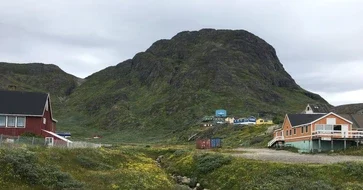
Photo: Narsaq /A Skjervedal 2018

In many places worldwide, there are requirements for the process of deciding whether and how to go ahead with specific projects as part of societal development. Such requirements concern, for example, new projects to extract of raw materials such as minerals, oil or gas; the establishment of renewable energy facilities such as wind turbines, as well as infrastructure projects such as harbours or airports. The process of deciding whether such project proposals should be granted permission and how they projects should be implemented includes an assessment of the consequences they can have for the environment and society – a so-called Impact Assessment (IA).

As explained in previous parts of this blog series, part of the purpose of an IA is public participation: securing the public access to information brought forward through the assessment, securing opportunities for the public to comment on the project and voice an opinion, and securing access to review institutions so that citizens may challenge a decision or permission given.

Some tendencies emerge when we study public participation in these processes. One of these is that conflicts often take place in local communities that may be affected by the projects. Such conflicts become visible in the participation processes. Research has demonstrated such conflicts in a number of countries, from Peru and Chile across Indonesia and European nations to Greenland. This begs the question what the origins of these conflicts are, and what role they play? This text will explore this, drawing on examples from a Danish and Greenlandic context.

In a series of four short blog posts, of which this is the last, we investigate public participation as a part of the planning and decision-making process concerning renewable energy, mining, infrastructure etc. We take point of departure in the overall question of ‘What constitutes a good public participation process from the public’s point of view, concerning social, environmental and/or human rights impacts in Impact Assessment (IA)?’ The blogposts communicate preliminary results from a research project investigating what constitutes best practice public participation. The project is based among other things on research and interviews conducted in Greenland in August 2018 and in Sápmi in June 2019. [Ref: NOS-HS project on Best practice for Impact Assessment of infrastructure projects in the Nordic Arctic: Popular participation and local needs, concerns and benefits(Principal Investigator: Karin Buhmann)]

National and regional conflict – us and them

At the national and regional level, we see examples where conflicts or opposition surface as part of the public participation process when the impacts of proposed development projects are being investigated. One example is a proposed project in the Southern part of Greenland, in the fell Killavaat Alannguat close to the town of Narsaq. Here, the mining company Tanbreez has applied for a permit to establish a mine that will produce various metals and rare earth minerals. Greenland’s 8th largest town in terms of population, Narsaq has 1400 inhabitants and is located in the southernmost part of Greenland, almost 500 km from the Greenlandic capital Nuuk. It is the same area, where a larger mine in Kuannersuit (Kvanefjeld) has been the object of a number of consultations and discussions in later years.

During a written public consultation held as part of the IA process for the project in Killavaat Alannguat, the following comment was part of a response sent in by a local citizen:

“How is the Ministry of Environment going to ensure that the environmental requirements are complied with? Are they going to set up an office here in South Greenland in the future? Nuuk is far away!”

The example demonstrates concern with the adequacy of monitoring and management of the environmental impacts of the project. Moreover, it indicates a conflict between the smaller local communities and the capital Nuuk, where decision makers are located. An opposition based on geography can be observed due to the fact that decision makers are far away in Nuuk where they will decide the future of the project and monitor the impacts occurring locally in Narsaq. Also, a conflict can be observed, related to the local community’s experience with the ability of national authorities in Nuuk to understand life, conditions and local business in Narsaq. This conflict concerning lacking understanding might be reinforced by the discussions concerning the project at Kuannersuit (see below). Many sheep farmers are concerned that uranium dust from a mine in Kuannersuit will affect the health of their sheep. Unlike Kuannersuit, the minerals in Killavaat Alannguat are not tied to uranium, but the uncertainty concerning impacts of Kuannersuit and whether the authorities are taking them seriously appears to have affected the trust in authorities and consultations in the area generally.

In Denmark we also see conflicts based in geography in relation to decisions on projects, as demonstrated by consultation comments from local citizens in relation to two projects with wind turbines on land in Varde bordering the North Sea, and on water in Sejerø Bugt off Zealand:

“Socio-economically, a prospective establishment of giant wind turbines also creates a wind turbine proletariat, transforming the neighborhood into a total fringe area of Denmark” (on shore wind turbines at Varde)

“Placing a wind farm at the suggested location risks making a fringe area of Denmark even more vulnerable” (off shore wind turbines at Sejerø Bugt)

The statements refer to a continuous debate in Denmark concerning the differences in development and opportunities between what is referred to as peripheral regions or peripheral Denmark and other parts of the country which are perceived as being in in a better position in regard to e.g. economy, infrastructure, or internet connectivity. Thus, these comments also reflect existing oppositions or conflicts at national and regional level and concerns that they may increase due to decisions made by power-holders located in other areas.

Local conflicts – development or decline?

Local level projects and the planning process can also cause deep conflicts in otherwise closely-knit local communities. Again, one example is the town of Narsaq in Southern Greenland. Here, another company, Greenland Minerals and Energy (GME), has proposed a mine in Kuannersuit (Kvanefjeld). The mine is to produce rare earth minerals with a biproduct of uranium. Based on conversations with locals in and around Narsaq in August 2018 our investigations indicate that most locals share a concern about the future of the local community, because they are experiencing depopulation and decline in activity in the area. However, the shared understanding does not extend to the perception of the role of the proposed mining project. Parts of the local community perceive the project as part of the solution, seeing it as something that can create development, activity and jobs in the area. By contrast, others perceive the project as something which, due to environmental impacts, will ruin the possibilities of developing for example tourism and sheep farming and thus create further depopulation. These very different attitudes towards the same project lead to a division in the local community between those who are in favour of the project and those that are against it. In a small local community where people know each other, this can have major consequences. One of the locals explains that since other locals in the area became aware that this person opposes the project, some have stopped greeting the person when meeting in the street, while others have begun to do so.

A planned biogas plant in Denmark offers another example. Here, a similar division appears between those who perceive the biogas plant as an important development project for agriculture in the area, and those who perceive it as something which will entail e.g. declining property prices, depopulation and challenges for other business. This is illustrated by to submitted consultation responses regarding the project:

“We fear that the area will lose jobs in the long term, because these businesses [other local businesses ed.] will not want to create more jobs here.”

”No one will want to buy a property in a town, where the smell is unbearable”.

In various local areas where renewable energy projects are being planned, interviews with inhabitants have showed examples of people falling out with one another because of disagreements concerning the project.

The role of conflicts in the local community

We have described two types of conflict: conflicts between citizens at local or regional level and decision makers at national level, and conflicts which create division at the local level. These cases show that conflicts are not always solely about the project itself but can be part of existing or larger scale conflicts or antagonistic relationships, for example between different business sectors or parts of a country or region. Such conflicts can be ongoing for long since planning processes can last for years depending on the type of project. In the example of Kuannersuit, exploration has been going on in the area for 70 years, while a specific project has been on the agenda since 2017 when GME obtained a license for mineral exploration. As long as remains uncertain whether an exploitation project will be approved and go ahead, uncertainty results: will the project provide jobs for us to continue living here? Will the project affect our sheep farming, and would it accordingly be wise to sell our sheep now? Is our farm going lose value and should we therefore sell it or restructure to tourism? Should our young people be educated in mining and raw materials or in farming? Such uncertainty is well-known from projects in various other places and has been found to cause long-term negative impacts on the progress and development of a local community, causing depopulation and general standstill. Conflicts over projects are potentially a cause for adverse impacts on a local community, starting already when the plan for the project is made public. These risks and impacts require the attention of project proponents, authorities and other involved parties, including affected stakeholders at the community level.

About the author:

Sanne Vammen Larsen is an expert in the field of environmental planning and impact assessment, with a focus on integration of climate change in Impact Assessment, local processes and social impacts, and dealing with risk and uncertainty. She is employed as an associate professor at The Danish Centre for Environmental Assessment at Aalborg University, Denmark.

Dansk version

Blog-post serie #4: Høringer, offentlig deltagelse og meningsfuld borgerinddragelse

Photo: Narsaq /A Skjervedal 2018

Når udvikling skaber splittelse

Sanne Vammen Larsen

Mange steder i verden er der fastsat bestemmelser om hvordan processen skal forløbe, når der tages beslutning om konkrete projekter som en del af udviklingen af samfundet. Det kan for eksempel dreje sig om opstart af aktiviteter til udvinding af råstoffer som mineraler eller olie og gas, men også installation af vedvarende energiteknologi som vindmøller eller infrastrukturprojekter som anlæg af havne eller lufthavne. Typisk vil en del af processen med at beslutte om og hvordan disse projekter skal gennemføres være, at der skal laves en vurdering af hvilke konsekvenser de kan få for miljø og samfund – en såkaldt VVM (vurdering af virkninger på miljøet). Som forklaret i tidligere afsnit af denne blogserie er en del af formålet med VVM at der i processen sker en inddragelse af offentligheden. Dette kan dels være at offentligheden skal have adgang til de informationer der kommer frem i vurderingen, dels at offentligheden skal have mulighed for at kommentere på projektet og give en mening til kende og dels at nogle af beslutningerne kan påklages efterfølgende. Når vi som forskere undersøger hvordan inddragelse af offentligheden i processen foregår, viser der sig nogle tendenser. En af dem er, er at der ofte udspiller sig konflikter i de lokalsamfund, som projekterne kan påvirke – konflikter som bliver tydeligt i forbindelse med inddragelsesprocesserne. Forskningen har påvist sådanne konflikter i en række lande – fra Peru og Chile over Indonesien og europæiske lande til Grønland. Spørgsmålet er hvad kimen til disse konflikter er og hvilken betydning de får? Dette vil vi med eksempler fra dansk og grønlandsk kontekst udforske i denne tekst.

I en serie på fire korte blog-indlæg, hvoraf dette er det sidste, ser vi på offentlig deltagelse som led i planlægning og beslutningsprocesser om grøn energi, minedrift, infrastruktur mv. Vi tager udgangspunkt i det overordnede spørgsmål ’Hvad er en god proces for borgerinddragelse i konsekvensvurdering (impact assessment) om samfundsmæssige, miljømæssige og/eller menneskeretlige indvirkninger fra borgerens perspektiv?’ Blogindlæggene formidler foreløbige resultater fra et projekt, som undersøger hvad er er god borgerinddragelse (’best practice’). Projektet bygger bl.a. på undersøgelser og interviews i Grønland i august 2018 og i Sápmi juni 2019. [Ref: NOS-HS project on Best practice for Impact Assessment of infrastructure projects in the Nordic Arctic: Popular participation and local needs, concerns and benefits(Principal Investigator: Karin Buhmann)]

Nationale og regionale konflikter – os og dem

På nationalt og regionalt niveau ser vi eksempler på, at der dukker konflikter eller modsætningsforhold op i forbindelse med inddragelse af offentligheden i afdækning af konsekvenser af forslag til ny større udviklingsprojekter. Som eksempel kan der ses på et foreslået projekt i Sydgrønland i fjeldet Killavaat Alannguat (Kringlerne) i nærheden af byen Narsaq. Her vil mineselskabet Tanbreez gerne etablere en mine, der skal producere en række metaller og sjældne jordarter. Narsaq ligger i det allersydligste Grønland, knap 500 km i lige linje fra den grønlandske hovedstad Nuuk. Med godt 1400 indbyggereer Narsaq Grønlands ottendestørste by. Det er samme by, hvor et projekt om en noget større mine i Kuannersuit (Kvanefjeld) har været genstand for en række høringer og andre drøftelser de senere år.

I forbindelse med en offentlig høring afholdt som del af VVM-processen om projektet på Kringlerne blev følgende kommentar indsendt som del af et høringssvar fra en lokal indbygger:

”Hvordan vil Departementet for Miljø og Natur kontrollere om miljøbestemmelserne bliver overholdt? Vil de i fremtiden have et kontor her i Sydgrønland? Nuuk er langt væk!”

Eksemplet viser en bekymring for, om overvågning og kontrol af projektets miljøforhold vil fungere tilfredsstillende. Det antyder samtidig en konflikt mellem de små lokalsamfund og hovedstaden Nuuk, hvor beslutningstagerne sidder. Der kan fornemmes et modsætningsforhold baseret på geografi i og med at beslutningstagerne sidder langt borte i Nuuk, hvor de dels tager beslutning om projektet og dels skal kontrollere de konsekvenser, som finder sted lokalt i Narsaq. Der kan også fornemmes en konflikt i forhold til lokalsamfundets oplevelse af forståelsen fra myndighederne i Nuuk for, hvordan det er at bo i Narsaq og deres respekt for de lokale erhvervsformer. Denne konflikt i forhold til forståelse kan være forstærket af diskussionerne om Kvanefjeldsprojektet (se nedenfor). Mange lokale fåreholdere er bekymrede over, om uranstøv fra en mine i Kvanefjeld vil påvirke sundheden hos deres får. I modsætning til Kvanefjeld er mineralerne på Kringerne ikke er bundet til uran, men usikkerheden omkring indvirkningen af Kvanefjeld og hvorvidt myndighederne tager bekymringerne alvorligt ser ud til at have påvirket tilliden til myndigheder og høringsprocesser generelt i området.

Også i Danmark ser man geografiske modsætningsforhold komme til udtryk i forbindelse med beslutning om projekter. I forbindelse med to projekter med vindmøller henholdsvis på land i Varde Kommune samt til vands i Sejerø Bugt indeholdt to af de indsendte høringssvar følgende kommentarer:

”Socio-økonomisk skaber en eventuel opsætning af kæmpevindmøllerne også et vindmølleproletariat, så egnen forvandles til et totalt udkantsDanmark” (Høringssvar vindmøller ved Varde)

”Opførelsen af en vindmøllepark med den foreslåede placering risikerer at gøre et udkantsområde af Danmark endnu mere sårbart” (Høringssvar vindmøller i Sejerø Bugt)

Høringssvarene henviser til en løbende debat i Danmark omkring forskellene i udvikling og muligheder mellem det, der i debatten kaldes udkantsområder eller udkantsDanmark og andre dele af landet, der opfattes som bedre stillet i forhold til blandet andet økonomi, infrastruktur, internetforbindelse mv. På den måde henviser disse kommentarer også til eksisterende modsætningsforhold eller konflikter på nationalt og regionalt niveau og afspejler bekymring for, at modsætningsforholdene bliver yderligere forstærket i kraft af beslutninger truffet andre steder i landet.

Lokale konflikter – udvikling eller afvikling?

Også på lokalt niveau kan projekter og planprocessen omkring dem skabe dybe konflikter i ellers tætte lokalsamfund. Et eksempel er igen koncentreret om byen Narsaq i Sydgrønland. Her har et andet selskab, Greenland Minerals and Energy (GME), foreslået en mine i Kuannersuit (Kvanefjeld). Minen skal producere sjældne jordarter og vil give et biprodukt af uran. Baseret på samtaler med lokale i og omkring Narsaq i august 2018 viser vores undersøgelser tydeligt, at de fleste deler en bekymring for lokalområdets fremtid, da de oplever en affolkning og en nedgang i aktiviteter i området. Enigheden hører dog op, når det kommer til holdningerne til det foreslåede projekts rolle. Dele af lokalsamfundet ser projektet som en del af løsningen, som noget der kan skabe udvikling, aktivitet og arbejdspladser i området. Andre ser helt modsat projektet som noget, der via de miljømæssige påvirkninger vil ødelægge mulighederne for udvikling for eksempel for turisme og fåreholdere og dermed skabe yderligere affolkning. Disse meget forskellige holdninger til det samme projekt fører til en splittelse i lokalsamfundet mellem dem, der er for og dem, der er imod projektet. I et mindre lokalsamfund, hvor folk kender hinanden, kan dette have store konsekvenser. En af de lokale fortæller, at siden de andre i lokalsamfundet har fundet ud af, at personen er imod projektet, er nogle holdt op med at hilse på gaden, mens andre er begyndt.

Et andet eksempel er et planlagt biogasanlæg i Danmark. Her er der en lignende splittelse mellem dem der ser biogasanlægget som et vigtigt udviklingsprojekt for landbruget i området, og de ser det som noget, der vil betyde bl.a. faldende huspriser, affolkning og udfordringer for andre erhverv. Det illustreres af to indsendte høringssvar til projektet:

”Vi frygter at området vil tabe arbejdspladser på sigt, fordi disse virksomheder [andre lokale virksomheder, red.] ikke ønsker at etablere nye arbejdspladser.”(Høringssvar: NGF Nature Energy Månsson A/S) ”Ingen gider købe et hus i en by, hvor lugten ikke er til at holde ud”. (Høringssvar: NGF Nature Energy Månsson A/S) Interviewede beboere i lokalsamfund i nærheden af planlagte vedvarende energiprojekter fortæller i flere tilfælde om naboer i lokalsamfundet, som ikke længere taler med hinanden på grund af uenighed om projektet. Konflikternes rolle i lokalsamfundet

Vi har beskrevet to typer af konflikter: dels mellem det lokale eller regionale niveau af borgere og det nationale niveau af beslutningstagere; dels i form af konflikter som skaber splittelse lokalt. Eksemplerne viser at konflikterne ikke altid kun handler om selve projektet, men kan blive en del af eksisterende og større konflikter eller modsætningsforhold, eksempelvis mellem forskellige erhverv eller dele af et land eller område. Konflikterne kan stå på længe, eftersom planlægningsprocesserne kan vare i årevis alt efter projektets type. I eksemplet fra Kvanefjeld, har der været foretaget undersøgelser i området i 70 år, mens der har været et konkret projekt på tegnebrættet siden Greenland Minerals and Energy i 2007 fik licens til at efterforske i området. Så længe det ikke er sikkert om planer om anlægsprojekter bliver til noget eller ikke, skaber de usikkerhed: Vil aktiviteten give flere jobs, så vi kan blive boende her? Vil aktiviteten påvirke vores fårehold, så det vil være klogt allerede nu at sælge fårene? Vil vores landbrug miste værdi, og skal vi sælge eller lægge om til turisthytter? Skal vores unge uddannes inden for minedrift og råstoffer, eller indenfor fåredrift, eller skal vi forlade området mens tid er? Denne type usikkerhed kendes fra anlægsprojekter mange steder, og kan påvirke lokalsamfundets udvikling negativt, så lokalsamfundet går i stå eller affolkes. Konflikterne omkring anlægsprojekter udgør potentielt en længevarende negativ påvirkning på et lokalsamfund, en påvirkning som starter når projektplanerne bliver kendte og som det er vigtigt at projektejere, myndigheder og andre involverede er opmærksomme på.

Om forfatteren:

Sanne Vammen Larsen er ekspert inden for planlægning og miljøvurdering, med fokus på integration af klimaforandringer i miljøvurdering, lokale processer og sociale konsekvenser samt håndtering af risiko og usikkerhed i miljøvurderinger. Hun er ansat som lektor ved Det Danske Center for Miljøvurdering på Aalborg Universitet.

  • « Go to Previous Page
  • Page 1
  • Page 2
  • Page 3
  • Go to Next Page »

Copyright © 2026 · Copenhagen Business School

  • Accessibility Statement
  • Privacy Policy
  • Cookies