• Skip to primary navigation
  • Skip to main content

← cbs.dk

CBDS

CBDS

Business in Development Studies

  • Home
  • Blogs
    • Corporate Social Responsibility
    • Critical Debates
    • Entrepreneurship 
    • Global Value Chains
    • Green Transition
    • Industrialization
    • Humanitarianism
  • Podcasts
  • Contact
  • Show Search
Hide Search

Webteam

Industrializing through global value chains? The case of the South African automotive industry

17 January 2022

Tobias Wuttke and Lindsay Whitfield

When trying to come up with lessons for developing countries that want to industrialize today, people usually refer back to the success of East Asia. But 40 years have passed since South Korea and Taiwan industrialized through exporting and import substitution. Countries trying to industrialize today face a world of globally fragmented production, a world of global value chains (GVCs). The question that has come to the forefront both in academic discussions as well as in policy circles is whether GVC participation can deliver for low-income countries what exporting did for South Korea and Taiwan. South Africa’s integration into the automotive GVC over the past 25 years makes for an interesting case study to shed some light on this question. The development of the South African auto industry has been a story of success and failure at the same time, not least because of the difficulties associated with industrializing in a world of GVCs.

South Africa is the only country in Africa, next to Morocco, that has an automotive industry worth speaking of. It produces 600,000 cars per year, 70% of which are exported, 3 out of 4 of them to Europe. The South African Department of Trade, Industry, and Competition consistently implemented an automotive industrial policy that provided investment support to the foreign-owned automotive assemblers and later support to foreign and locally owned component manufacturers as well. These industrial policies made support for foreign direct investment in the sector conditional on auto assemblers exporting cars and on using some degree of local content.

On the surface, the South African government seems to have followed the industrial policy playbook of the developmental states of the second half of the 20th Century, as illustrated by Alice Amsden. However, the automotive industry has failed to play the role of a leading sector for economic development that it did in South Korea and Taiwan. This is because South Africa’s industry lacks locally owned firms participating at the technological frontier in the industry and it lacks significant linkages with other industries in the country. These limitations result from insufficient industrial policy to support local firms and from the ways in which the automotive global value chain has evolved since the 1990s.

Volkswagen South Africa Plant in Uitenhage, Eastern Cape

The automotive industry in South Africa makes up 6-7% of the country’s GDP, roughly a quarter of manufacturing output, and employs more than 100,000 people in vehicle and component production. There are three automotive hubs in the country: Gauteng with Ford, Nissan and BMW; the Eastern Cape with VW, Mercedes-Benz and Isuzu; and Durban with Toyota. In addition to the assemblers, South Africa has attracted investment by many of the largest multinational component suppliers, such as Continental, ZF, Bosch, MA Automotive, Dana Spicer, Benteler, etc. There are also around 200 locally owned component manufacturing firms engaged in the automotive value chain.
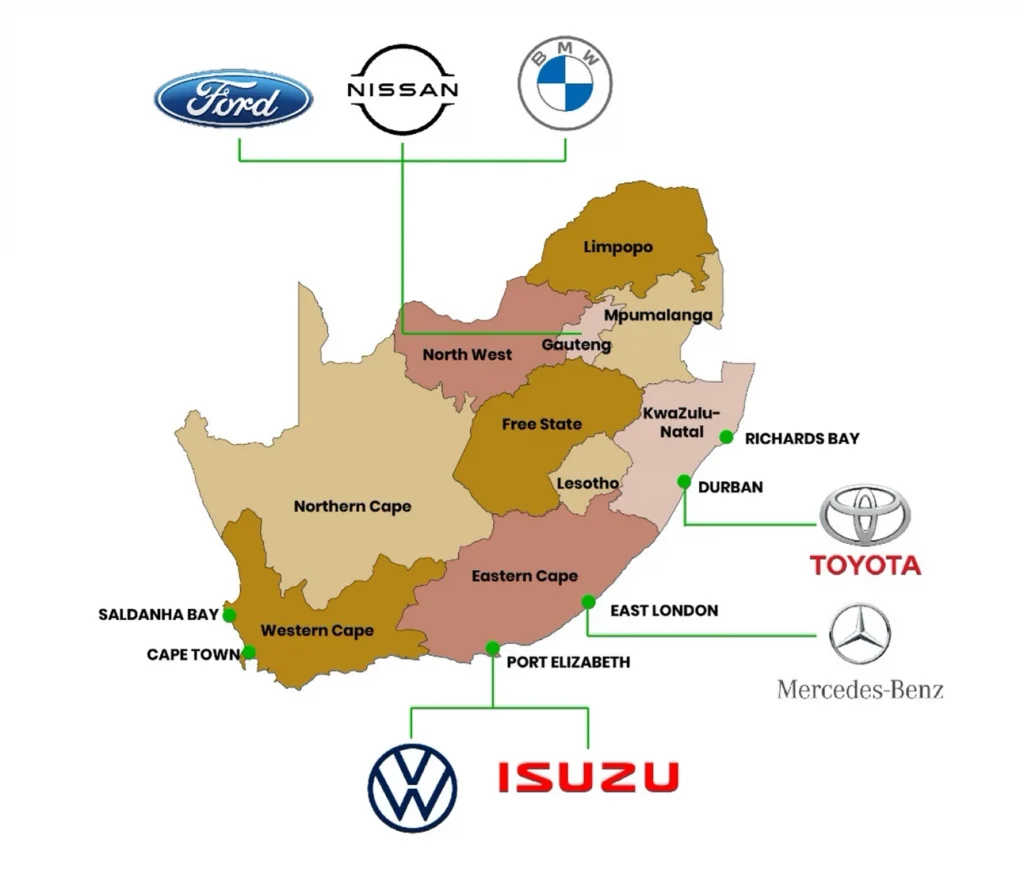
Passenger vehicle assemblers in South Africa (Source: NAAMSA)

The automotive industry has lots of potential for backward linkages. A car is made of 10,000 different parts, from various materials – steel, aluminium, plastics, glass, leather, textiles, rubber. Automotive production is characterized by just-in-time (JIT) and just-in-sequence (JIS) requirements, which means that some local footprint is always established once volumes go beyond pure kit assembly. But on the other hand, the automotive GVC is also characterized by follow design and follow sourcing, meaning, for example, that Volkswagen designs their car in Wolfsburg, produces that exact car in its plants all over the world without much local design adaptation, and asks its established large suppliers from developed countries to set up subsidiaries next to its plants in developing country locations to fulfil the JIT and JIS requirements.

This used to be different. Up to the late 1980s, cars were locally designed, and significant and distinct local supplier networks supplied materials and parts to the automotive assemblers in developing countries. This situation has been superseded by the almost total ubiquity of the ‘global car’, with follow design and follow sourcing, since the 1990s. In the case of South Africa, in the early 1990s, several of the assemblers and most of the component firms were partially or fully locally owned. This had already changed by the mid-2000s with all seven assemblers as well as many of the component firms being in full foreign ownership.

The automotive assemblers in South Africa do not undertake local R&D. They assemble vehicles that have been designed in their R&D headquarters. The same is true for multinational component suppliers. In addition to that, none of the locally owned supplier firms in South Africa conduct their own design or product development. Instead, they produce subcomponents based on design drawings either from the assemblers directly or from subsidiaries of multinational suppliers also operating in South Africa. The most common components that locally owned firms produce are plastic injection mouldings, metal pressings, and trim components. The total lack of local R&D is very concerning, given the historical importance of the development of innovation capabilities in local companies in successful catch-up industrializers. It is not unique to South Africa. As Richard Doner and colleagues show in their recent book on the automotive industry, not even Thailand – which has an auto industry more than three times the size of South Africa – has managed to develop local R&D capabilities.

Plastic moulded component (Principle Plastics); metal pressed component (CRH); trim component (Acoustex).

Locally owned suppliers in South Africa complain about low-profit margins, difficulties to access funding, excessive demands from their buyers regarding certifications, audits, open-book-costing, and production flexibility. They still decide to service the auto industry because it has high and steady demand, as vehicle exports mean production volumes are much higher than they would be if firms were producing only for the domestic market. Domestic demand for vehicles is limited by low incomes and high inequality and has stagnated since 2008.

Looking further upstream, the backward linkages from automotive assembly and component production to the local material industries in South Africa have also been disappointing. South Africa has a local steel mill, two large local polymer producers, and a local aluminium smelter. Nevertheless, by far the majority of the materials for automotive production are imported. It is a consequence of follow sourcing and the fact that material requirements for automotive are incredibly high. BMW does not use the same polymeric material for a car bumper as Mercedes-Benz does. They all have their own standards, formulations, blends, and intellectual property around this. This hyper-diversity of materials reduces the scale of production and thus makes firm-level investments into the local production of materials less attractive.

The scale of production in the South African automotive industry – albeit exporting 70% of final output – is still insufficient to localize more sophisticated components like engines and electronics, materials production, as well as tooling and machinery (almost all tooling is imported; all machinery is fully imported). In contrast to exports of vehicles, exports of components are low (with the exception of catalytic converters based on locally available platinum-group metals). The government tries to tackle this scale problem. The South African Automotive Masterplan aims at upping vehicle production volumes from 600,000 to 1.4 million by 2035. Whether this can be achieved remains to be seen. It is certainly true that if production volumes could be increased, this would help achieve further localization. Some countries with larger production volumes like Thailand have for example managed to localize the production of engines and transmissions (for a comparison of localization achievements of different countries, see here).

Ford Ranger on the road in Johannesburg. The pick-ups – locally called bakkies – are the most common vehicle produced in South Africa.

The South African picture is not unique. The requirements to get some of the historically important elements of industrialization going, like inter-industry linkages and nurturing innovation capabilities in locally owned firms, have increased substantially compared to the time when South Korea and Taiwan started their automotive industries. The gap between incumbents and followers has widened. Doner and his colleagues show that out of the top 100 global automotive suppliers in 2019, only three came from countries other than from Western Europe, the US, Japan, South Korea and China (Motherson from India, Nemak from Mexico and Iochpe-Maxion from Brazil). Incumbent lead firm power in both assembly and component manufacturing is huge. They undertake most R&D and orchestrate global sourcing of materials and components. Other research demonstrates that the denationalization of automotive industries is commonplace across developing countries, see e.g. here and here.

While it has been emphasized in policy circles that the emergence of GVCs has made it easier for developing countries to enter export markets for manufactured goods and led to increases in local firms’ productivity, the case of the automotive GVC illustrates two major limitations of GVC-based industrialization. The potential for the development of inter-industry linkages and innovation capabilities in developing countries participating in the automotive GVC is undermined by excessive incumbent power, follow design, and follow sourcing.

This blog is based on the PhD research carried out by Tobias Wuttke. The PhD project is on the South African automotive industry, researching the technological capabilities of local component manufacturing firms, linkages from the industry to other domestic economic sectors, and the role of industrial policy. Primary data collected throughout 2021 both online and in South Africa includes semi-structured interviews with vehicle assemblers operating in South Africa, materials producers, multinational automotive component manufacturers, locally owned South African automotive component manufacturers, as well as several interviews with policymakers and industry experts. Some of the research was conducted together with Lorenza Monaco of GERPISA, ENS Paris Saclay.

Tobias Wuttke is a Ph.D. Fellow at Roskilde University, Department of Social Sciences and Business.

Lindsay Whitfield is Professor of Business and Development at the Centre for Business and Development Studies, within the Department of Management, Society and Communication at Copenhagen Business School.
Ethiopia’s apparel export industry, the Tigray conflict, and US preferential market access

2 December 2021

By Lindsay Whitfield and Felix Maile

Earlier last month, Ethiopia was at the center of global attention. The federal Ethiopian government announced a nationwide state of emergency on November 2, as the now one-year-long conflict between the federal government defence forces (and regional militias) and forces led by the Tigrayan People’s Liberation Front (TPLF) threatened to spread from the Tigray region across the country, including the capital city Addis Ababa. The same day, US President Biden suspended Ethiopia’s duty-free access to the US, based on ‘gross violations of human rights by all involved parties in the conflict’. These two developments could mark a turning point for Ethiopia’s emerging apparel export industry, which was labelled the ‘next global sourcing hub’ for the global fashion industry, but also as a potential catalyst for broader industrialization in the country. In the course of the EthApparel research project, we had the chance to speak to some apparel export firms in Ethiopia on what the conflict and the African Growth and Opportunity Act (AGOA) suspension means for the future of the industry in Ethiopia.

Ambitious strategy, challenging implementation

With global fashion brands and retailers aiming to diversify their sourcing base away from China and Bangladesh, Ethiopia seemed to constitute a perfect alternative sourcing location. It offered duty-free access both to the EU and the US market; low production costs related to wage labor, electricity, and water; and the potential to source inputs locally. Additionally, the Ethiopian government provided strategic support to the sector through fiscal and financial incentives as well as the construction of dedicated industrial parks, such as the flagship park in southern Hawassa that opened in 2017. These industrial policies attracted global buyers including PVH Corp., H&M, Calzedonia, and The Children’s Place, which in turn encouraged some of their major suppliers from South Asia and East Asia to take factory sheds in the industrial parks. The Ethiopian government expected apparel exports to generate scarce foreign exchange and significant employment for its growing population, in the second most populous country in Sub-Saharan Africa, as well as constitute an entry point for broader industrialization.

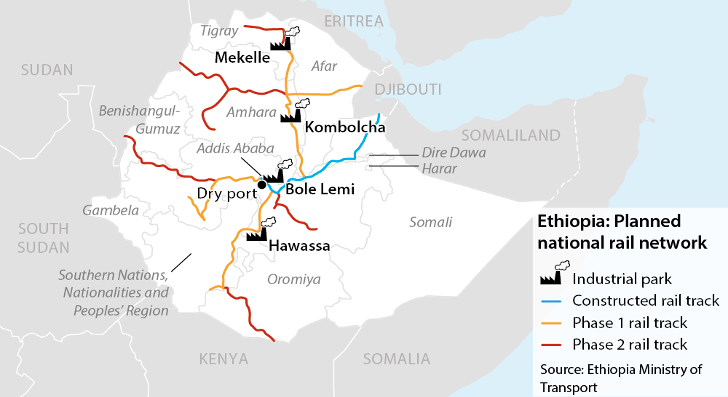
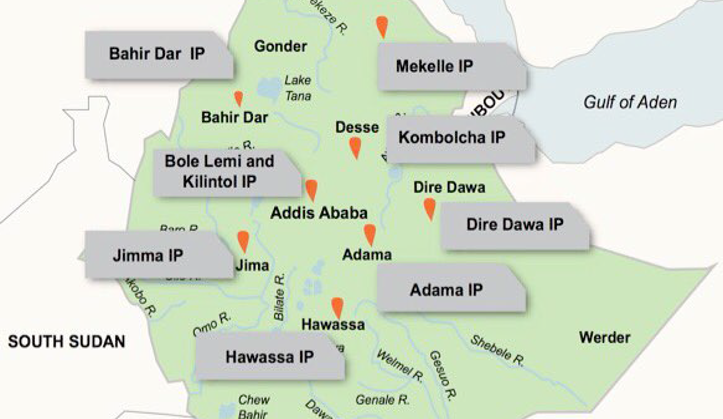
Map of Ethiopia, with the locations of the industrial parks (IP)

While the initial hype, which was shared by the global buyers, their supplier firms and the Ethiopian government, was substantiated by impressive growth numbers, expectations were not fully met. Prior to the COVID-19 pandemic, apparel exports grew from $13m in 2010 to $164m in 2019, and employment in the apparel export created jobs for around 72,000 workers by mid-2019. However, these figures are significantly below the targets set by the Ethiopian government within its Growth and Transformation Plan II, which envisioned much higher export revenues ($ 779m) and higher employment numbers of 170,000 for the textile and apparel export sector by 2020.

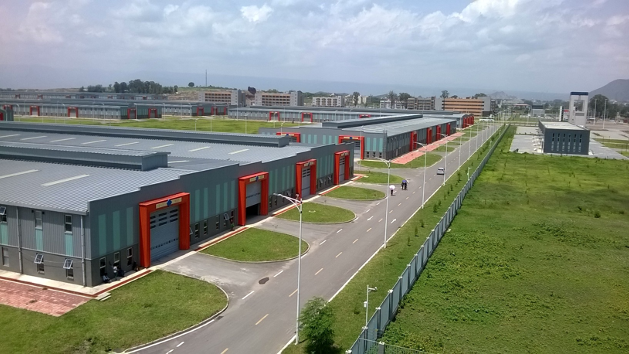
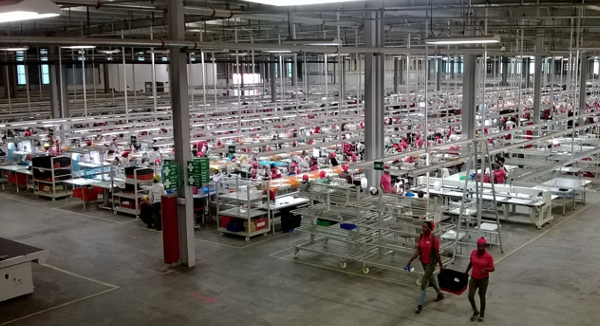
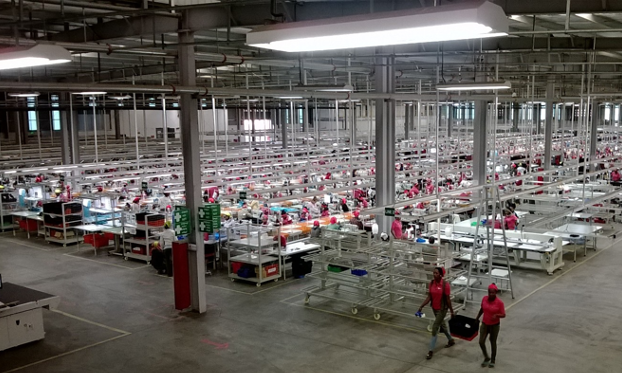
Inside a factory shed at Hawassa Industrial Park

This lower-than-expected performance can be attributed to different factors. The interest of global buyers stalled after 2017, making it more difficult for the government to fill the sheds in industrial parks that were still being built. The waning interest of buyers occurred as the somewhat naïve narrative of a ‘large, abundant and cheap’ labor force in Ethiopia propagated by the Ethiopian government proved to be more complex. Labor turnover was high and productivity low in existing factories, and new supplier firms found it difficult to source labor: workers were not lining up at their doors, as the government promised. Furthermore, most inputs had to be imported, and transport times were long from land-locked Ethiopia, resulting in long lead times from when buyers placed orders to when they were received. Although more foreign input and textile firms were in the process of being established, locally owned textile, accessory, and packaging firms found it difficult to meet the required quality standards, without direct support.

These shortcomings were acknowledged by the government, which was making efforts to address them, but they were cut short first by the COVID-19 pandemic and then the outbreak of civil war.

Quick COVID-19 recovery, but spreading conflict was the critical turning point

The year 2020 was one of the toughest for apparel global value chains, as store closures in the US and Europe during the COVID-19 pandemic and related order reductions by buyers put massive pressure on governments, firms and workers across apparel supplier countries. This also partly applied to Ethiopia, where exports dropped by around 50% and employment by 10% in mid-2020. However, production in the apparel sector quickly recovered to pre-pandemic levels, as orders picked up again from September 2020 onwards. Furthermore, the outbreak of the conflict in the Tigray region in November 2020 led to an immediate closure of the Mekelle Industrial Park in Tigray, but production continued at the other industrial parks.

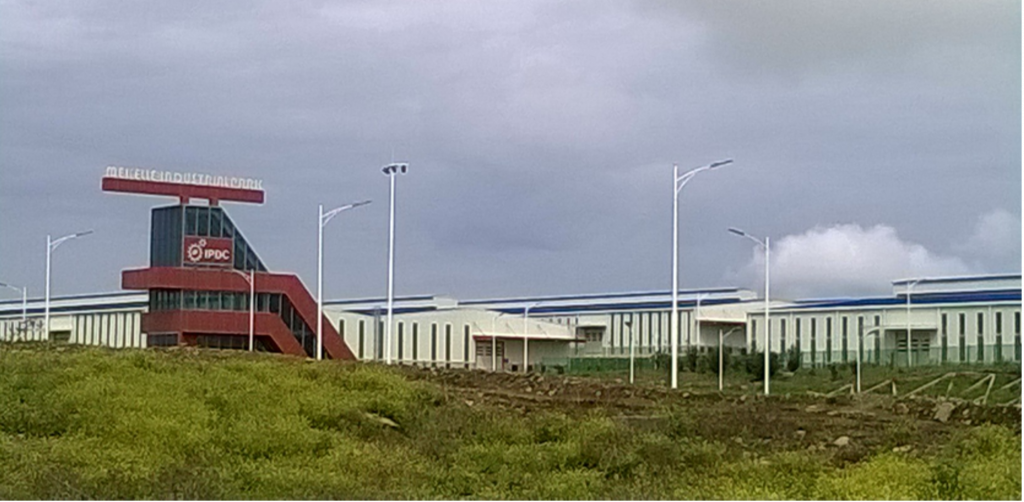
Mekelle industrial park, which was closed after the outbreak of the conflict on November 4, 2020

Global fashion brands sourcing from Ethiopia did not seem to show much reaction to the conflict and the related reports on human rights violations, and rather remained in a ‘wait and see’ position as long as the conflict remained limited to the Tigray region. Paradoxically, there were even new investments by manufacturers from China, and some suppliers in Bole Lemi industrial park reported to make profit for the first time in 2021 since they started operations in Ethiopia back in 2016.

Notably, then, it was the US announcement of Ethiopia’s suspension from duty-free access to the US market that changed supplier and buyer perceptions of Ethiopia as a sourcing location. Suppliers we spoke with in Bole Lemi industrial park were now questioning whether they would continue their operations in Ethiopia in 2022, despite full order books. This is mainly due to their overwhelming dependence on the US market, which is the destination for around two thirds of Ethiopia’s apparel exports. Some supplier firms even produce entirely for the US market. With the loss of preferential market access under AGOA, these firms will have to pay around 30-35% customs on their respective goods in the US market.

Shifting to the European market — where preferential market access still exists — is a limited option for most firms that we interviewed because they specialize in bulk orders of basic products to US retail chains. Changing their business strategy to one supplying the more fashion-oriented EU market would require time and additional investments. Thus, moving production to other African countries with duty-free access to the US, such as Kenya, is a more feasible option for most firms. The sunk costs in apparel assembly production are not high, especially when factory sheds are rented in government-owned industrial parks and have not been built by the supplier.

Factory sheds at Hawassa Industrial Park, Hawassa, Ethiopia

The further escalation of the conflict in recent weeks has caused additional fear among these apparel suppliers that the fighting, which is spreading southward, may lead to a cut of the railway connections to the port in Djibouti, from where Ethiopian apparel is shipped to the end destinations, or even reach the industrial park. In mid-November, the anchor tenant of the Hawassa Industrial Park, PVH Corp., announced the closure of its joint venture factory due to the spread of the conflict.

Map of Ethiopia showing the rail line from Addis Ababa to the Djibouti port (the blue line) and the major apparel industrial parks in Hawassa, Bole Lemi, Kombolcha and Mekelle

The future is bleak

The Ethiopian government has criticized the US intervention as a biased and ‘misguided’ decision, ‘threatening the livelihood of 200,000 low-income families, mostly women who have got nothing to do with the conflict’. The government also pointed to the fact that previous human rights violations under the TPLF, which governed the country prior to 2018 when political protests led to a shuffle of leadership within the EPRDF coalition government, did not impede Ethiopia’s AGOA eligibility. At the same time, the US government made clear that maintaining Ethiopia’s duty-free access from January 1 onwards would require the allowance of UN agencies to investigate human rights violations, and to end the blockade of humanitarian supply to the Tigray region.

The solution to the spreading conflict, the AGOA controversy, and the survival of Ethiopia’s nascent apparel export industry is a ceasefire between the Ethiopian government and the TPLF-led forces, the resumption of humanitarian aid to the Tigray region, and political negotiations. While there are initial signs that point to a possible diplomatic solution of the conflict under AU mediation, these hopes remain marginal given intensified fights at the frontline. Furthermore, the extent to which ethnic sentiments and propaganda has caused polarization and the spread of hatred in the country is worrying and makes future peace and reconciliation a complex task.

This blog post is part of the research project ‘Decent Work and GVC-based industrialization in Ethiopia’ (EthApparel), funded by the Danida Fellowship Centre. EthApparel asks whether Ethiopia’s integration in the apparel GVC can drive industrialization that is sustainable both from the perspective of supplier firms and workers. The project team brings together researchers from Copenhagen Business School and Roskilde University, Denmark; Open University, UK; University of Vienna, Austria; and Mekelle University, Ethiopia.

Lindsay Whitfield is professor of business and development at the Centre for Business and Development Studies, within the Department of Management, Society and Communication at Copenhagen Business School.
Felix Maile is a PhD student from the Department of Development Studies, University of Vienna. His research focuses on the link between global value chains, financial markets and financialization. In his dissertation, he addresses the question in which way financial markets and investors shape the strategies of transnational fashion corporations, and how this affects the value capture of supplier firms in Ethiopia.

Further Reading

Oya, C., & Schaefer, F. (2021). The politics of labour relations in global production networks: collective action, industrial parks, and local conflict in the Ethiopian apparel sector. World Development, 146, 105564.

Whitfield, L., Staritz, C., & Morris, M. (2020). Global Value Chains, Industrial Policy and Economic Upgrading in Ethiopia’s Apparel Sector. Development and Change, 51(4), 1018-1043.

Whitfield, L. and Staritz, C. (2021). The Learning Trap in Late Industrialization: Local Firms and Capability Building in Ethiopia’s Apparel Export Industry’. Journal of Development Studies 57(6): 980-1000.

Escaping Known Sustainability Problems: From Diamonds to Coloured Gemstones

29 November 2021

By Lotte Thomsen (Centre for Business and Development Studies, Copenhagen Business School) and Martin Hess (School of Environment and Development, University of Manchester)

Gemstone Market in Chanthaburi, Thailand (Photo Credit Ansar Ahmed)

Did you also wonder why coloured gemstones, like rubies and emeralds, are ‘back in the market’? And why they abruptly compete with diamonds, which were otherwise the most valuable and desirable stones since the early 1900s? Our joint effort to provide some answers to these (and other) questions so far led to a newly published paper in Economic Geography, which explores the connections between the rising popularity of coloured gemstones and a corporate re-focusing away from diamonds.

The image and value of diamonds was challenged and problematized since the 1990s when they became connected with a variety of sustainability challenges, not least with conflict in diamond supplier countries. In contrast, the social and environmental problems of the coloured gemstone industry have not yet been the focal point of similar scrutiny and intensive research. Rather, coloured gemstones are often branded as “sustainable”. We show how the rising popularity and value of coloured gemstones is part of a “corporate escape” from known problems in the diamond sector.

Gemstones are highly connected to their “grounded” nature and geographical origination. “Geography” is therefore an essential aspect of gemstone and jewellery valuation, and “provenance” is often utilised as a marketing tool in the industry. However, using “origination” for branding purposes certainly works best when the places in which consumer products origin are perceived as “exotic and adventurous” rather than “problematic and unsustainable” by consumers. Gemstones frequently originate from “dark places”, where sustainability challenges for mining communities, workers, and the environment are severe and manifold. Gemstones are also often unearthed where sourcing is considered unethical or even embargoed. Thus, the geographical origination of gemstones is potentially problematic for retail sales.

Corporations therefore increasingly turn to strategies and practices of “geographical dissociation” of places and matters that are damaging for retail sales and brand reputation. An inherent intransparency of the industry has become key to such processes of dissociation. Gemstone mining, processing, and trading takes place in overly complex and unregulated supply networks which connect with global value chains for gemstone and jewellery. Thus, coloured gemstones that enter into international markets commonly involve informal—and sometimes illicit—mining and trading practices.

You can read much more about the myriad of trading networks and global value chains for coloured gemstone and jewellery, by accessing our full paper:

Lotte Thomsen & Martin Hess (2021) Dialectics of Association and Dissociation: Spaces of Valuation, Trade, and Retail in the Gemstone and Jewelry Sector, Economic Geography. https://www.tandfonline.com/doi/full/10.1080/00130095.2021.1989302?src

References

Channel News Asia. 2018. Why coloured gemstones are so popular right now.

Ibert, O., Hess, M., Kleibert, J., Müller, F., and Power, D. 2019a. Geographies of dissociation: Value creation, ‘dark’ places, and ‘missing’ links. Dialogues in Human Geography 9 (1): 43–63.

Pike, A. 2015. Origination: The geographies of brands and branding. Oxford: Wiley.

Shortell, P., and Irwin, E. 2017. Governing the gemstone sector: Lessons from global experience. Natural Resource Governance Institute, September 19, 2017

Wright, C. 2004. Tackling conflict diamonds: The Kimberley Process certification scheme. International Peacekeeping 11 (4): 697–708.

Contested Sustainability in Tanzania: The Political Ecology of Conservation and Development

22 November 2021

By Stefano Ponte, Christine Noe, Dan Brockington, Opportuna Kweka, Rasul Ahmed Minja, Robert Katikiro, Faraja Namkesa, Mette Fog Olwig, Pilly Silvano, Ruth John, Kelvin Kamde, Lasse Folke Henriksen and Caleb Gallemore

The issue

New and more complex partnerships are emerging to address the sustainability of natural resource use in the Global South. These partnerships variously link donors, governments, community organizations, NGOs, firms, consultancies, certification agencies and other intermediaries. High expectations and many resources have been invested in these initiatives. Yet, we still do not know whether more sophisticated organizational structures, more stakeholders involved, denser social networks and more advanced participatory processes have delivered better sustainability outcomes, and if so, in what sectors and under what circumstances.

The research project

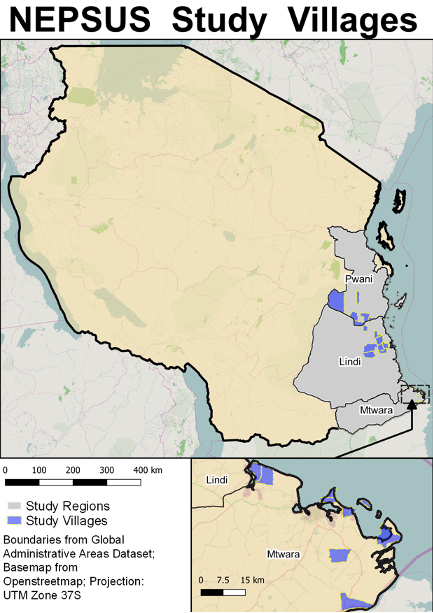
To fill this knowledge gap, the collective research project New Partnerships for Sustainability (NEPSUS), funded by FFU [1], assembled a multidisciplinary team to analyse sustainability partnerships that seek to combine conservation and development objectives in three key natural resource sectors in southeast Tanzania: wildlife, forestry and coastal resources. Researchers from Copenhagen Business School, the University of Dar es Salaam, the University of Sheffield and Roskilde University undertook five years of research, which involved carrying out a total of 331 key informant interviews, 81 focus group discussions, a survey with 1019 respondents, participant observation, and the collection of secondary documents, statistics, remote sensing and social network data.

In each of these sectors, we assessed whether co-management with local communities and private and civil society actors, and putatively more participatory processes in the governance of natural resources, result in positive environmental outcomes and improved livelihoods. We compared institutionally ‘more complex’ partnerships to relatively ‘simpler’ (more traditional top-down and centralized) management systems – and to ‘control’ locations where there are no partnerships in place.

Source: NEPSUS

We also assessed network complexity – as actors can use social networks to share their experiences, values, interests, knowledge and resources, but also to facilitate resource exchange and handle possible tensions. At the same time, networks may survive only when the most powerful and influential members of a partnership keep them alive, thus possibly reinforcing existing power imbalances. Our interest was to assess whether partnership complexity (in its institutional and network aspects) affects the ability to deliver sustainability outcomes.

Photo credit: Stefano Ponte

Main findings

Legitimacy

Despite deliberate, evolving and persuasive efforts to raise awareness on the relevant rules and regulations, sustainability partnerships have struggled to gain and maintain legitimacy. Local communities are yet to perceive these partnerships as responsive, accountable and trustworthy arrangements that strike the requisite balance between community welfare and conservation goals.

Communities living in forestry sites perceived relatively higher levels of socio-economic and environmental outcomes accruing from new partnerships than their counterparts in wildlife and coastal resource sites. Lack of material incentives in wildlife partnerships and coastal partnerships limited their legitimacy in the eyes of local communities. Fishers and consumers of bush meat were affected by access restrictions, and alternative livelihood activities failed – or their benefits went to a small number of wealthy investors.

Complexity

We expected network complexity to correlate positively with institutional complexity, as the latter often entails participation of, and coordination between, a wide set of stakeholders. We found that there is a statistical association between these two dimensions (although it is highly sector-dependent), and that the building of more complex networks tends to predate the joining of more complex institutional governance forms. We interpret this as an indication that network building needs to be part of the initiation process of these partnerships.

Photo credit: Ruth John

Environmental impacts

The analysis of our remote sensing data suggests that there is a positive relationship between a higher degree of both institutional and network complexity and the maintenance of forest cover (in relation to forestry, wildlife habitats, and mangroves). However, we found no consistent relationships between either form of complexity and the perceptions by survey respondents on local environmental change.

These findings indicate that there is some potential for (institutional and network) ‘more complex’ forms of sustainability partnership to support effective natural resource management. But institutional complexity does not simply emerge on its own. It must often be deliberately constructed and maintained and it involves previous work building complex networks.

Photo credit: Stefano Ponte

Impacts on livelihoods

Most people in the study sites we researched are farmers. Their livelihoods will improve to the extent that their farming revenues increase, and this happens mainly in relation to improved transport arrangements and farm-gate prices. New sustainability partnerships need to support farming activities if they are to bring prosperity. New partnerships on sustainability matter. They can make laws more just and fairer. They can introduce new business opportunities. They can safeguard natural resources more effectively. But they are not likely to be engines of large-scale prosperity of agricultural communities.

Photo credit: NEPSUS

Cultivating Partnerships

Instead of decentralization, we are witnessing accountability transfers that move obligations to local authorities without sufficient resources allocated to them to carry out their tasks. In the contexts we examined in southeast Tanzania, we observed a multiplication in the number and variety of actors engaged in sustainability partnerships. These actors often represent different interests, express different world views and bring with them specific hopes, expectations and claims. Smaller and weaker actors – especially those who do not have capacity, organizational skills, and resources to participate as equals in partnerships – have been marginalized in decision-making.

Photo credit: Stefano Ponte

We also see that the functional quality of sustainability partnerships in Tanzania depends on how they are embedded in networks of actors and institutions. To some extent, we have shown that social networks can act as potentially positive mediators of collective action coordination and collective learning processes.

Photo credit: Stefano Ponte

Sustainability partnerships have been more inclined towards the provision of training on conservation issues than the development of alternative livelihood activities. As a result, they have had limited effects on socio-economic and livelihood outcomes, especially at the household level. They have thus failed to strike a balance of conservation and socio-economic outcomes, with the partial exception of community-based forest management. This has culminated into significant levels of community dissatisfaction with their performance.

Policy recommendations

1) Local community governance needs to be strengthened to improve a sense of ownership and increase cooperation and trust.

2) The income accruing from sustainabitlity partnership activities need to be distributed evenly and in a transparent manner, no matter how small.

3) Duplication and unclear division of labour among different actors and jurisdictions need to be addressed.

4) Long-term consistent financial support is essential.

5) The government and collaborating actors should provide clear economic incentives and support community-based enterprises.

6) When access to resources is tightened, it is essential that alternative sources of livelihood that make sense to local communities are facilitated.

7) Efforts should be made to facilitate contacts between local communities and other key actors before the establishment of sustainability partnerships and maintained during their operation.

For more information, see www.nepsus.info

Keep an eye open for the forthcoming open-access book: Stefano Ponte, Christine Noe and Dan Brockington (eds) Contested Sustainability: The Political Ecology of Conservation and Development in Tanzania. James Currey.

[1] The Consultative Research Committee for Development Research (FFU) is a programme committee that advises the Ministry of Foreign Affairs of Denmark regarding Danida’s support to development research.

Living in wildlife villages: the elephant in the backyard

8 January 2019

By Ruth Wairimu John as part of the NEPSUS Series

When I joined the NEPSUS team in 2016 as a PhD candidate, I didn’t expect to come across wild animals in the villages. On the day of my arrival to Mloka village in March 2017, I immediately bumped into elephants at Selous Kinga Lodge. Mloka is one of the villages bordering the Selous Game Reserve, the largest and oldest game reserve in Africa. I was shocked by the appearance of elephants so close to the lodge’s bar and wondered if it is common to see elephants in the village, perhaps even approaching the villagers’ private houses. At midnight, I suddenly woke up when I heard noises of people shouting. I looked through the window and recognized a crowd of people passing by, yelling and trying to chase away an elephant that was eating fruits at the local market.

The next morning, I wanted to find out what exactly had happened during the night. The villagers showed me the leftovers of the fruits at the local market, where the elephant had eaten during the night. From that day on, I perceived it as normal to come across elephants in the village, though encountering wildlife can be dangerous. I was very cautious when walking through the village, especially when I was heading to a key informant interview at one of the houses located outside of the center and closer to the reserve.

The lion that killed 40 people

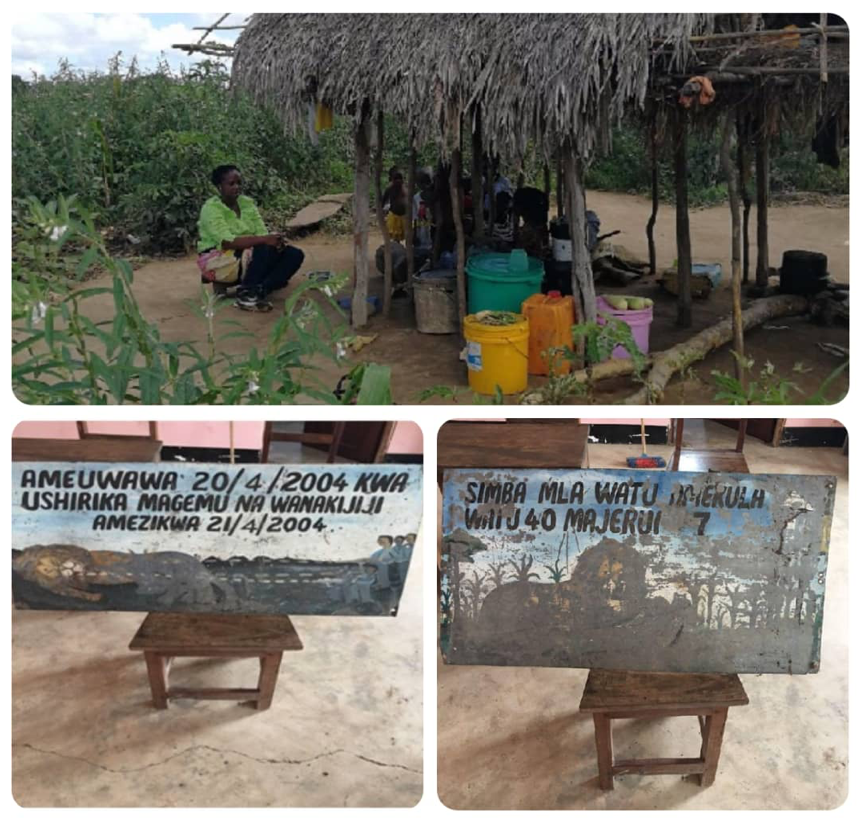
Among the memorable stories of wild animals in Rufiji district is that of a lion which killed about 40 people and injured more than 20 people in 2004/2005. The male lion lingered around the villages for more than six months, attacking people in their upstairs houses, called “Vidungu” in Swahili, killing and eating them. These upstairs houses are used during day and night to protect crops on the farmland from being destroyed by wild animals. When the lion came to understand that villagers were sleeping in the “Vidungu”, it started to attack them during the night. The rangers, in collaboration with the District Game Office, needed over six months to find and finally kill the lion. The villagers at Ngorongo village told me that many people attended the lion’s funeral and that they had put up a sign where the lion was buried.

Kidungu at one of the farms; signs at Ngorongo village office; this is among the memorable stories in the village; pictures taken by Ruth John

Close encounters

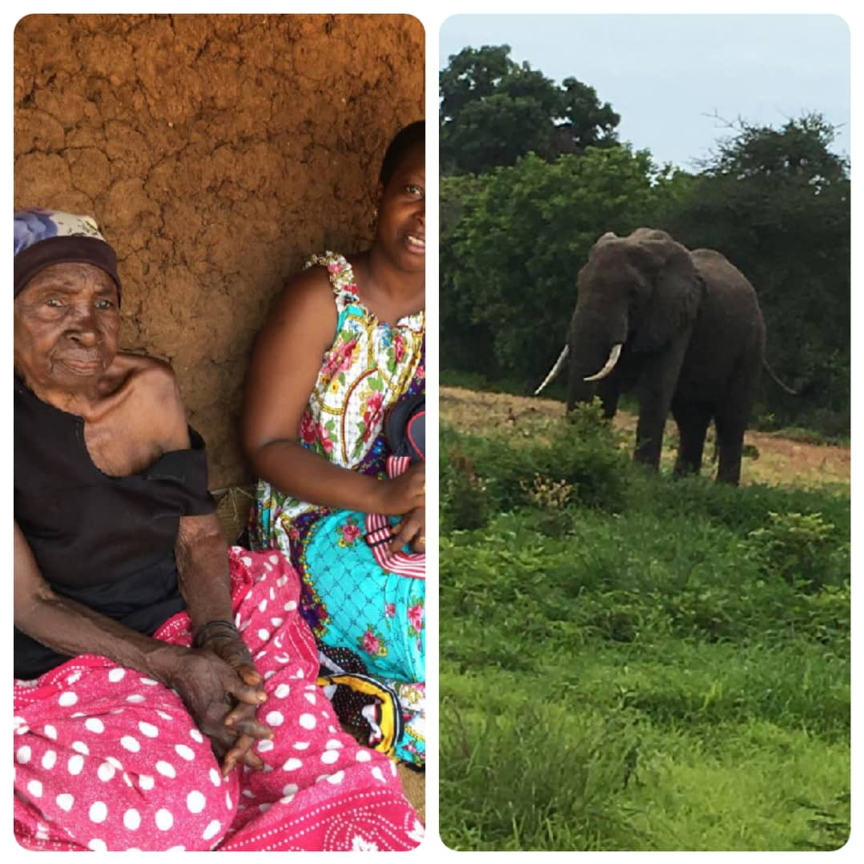
During my fieldwork, I encountered a lot of wildlife. One day, I was interviewing an old woman about the history of Mloka village. She suddenly went quiet and told me to look at my right side. I recognized big elephant standing a few meters away from us in the backyard. I asked the old woman what we should do and she told me to be silent, as the elephant would just pass and go up to the village, where it had eaten the fruits at the local market before.

An elephant in the backyard of the old woman’s house; pictures taken by Ruth John

Protecting wildlife, threatening livelihoods

After a few weeks I travelled to Ngorongo village, where I shared my elephant story with some elders from the village. They responded that they did not perceive it as a shocking story, since they live and co-exist with these animals and still feel safe in the village. They considered it tolerable that wild animals eat and destroy crops on the farms, since they have already coped well with these challenges for many years. This view persists, though the government has not yet introduced a sufficient compensation scheme which could help the villagers to limit the damage caused to their livelihoods. The consolation scheme provided by the government is not adequate; the process of soliciting compensation is very time-consuming and can take years to be resolved. Moreover, the local institutions lack capacity for dealing with wild animals that cross the borders and enter the villages. Sometimes, even when game rangers chase elephants back to the game reserve, they come back just after a few hours.

Villagers perceive that elephants are more protected than human beings. When elephants destroy or eat crops from the local fields, the only action taken by the government is to chase them away, using light bullets that cannot kill them. After a few days, the elephants come back. During harvest time, the villagers have no other option than taking from the field what the elephants have left. From the day of planting the seeds to the last day of harvest, the villagers have to stay close to their fields, chasing elephants away as they raid crops, damage assets and sometimes even kill people.

Conservation efforts by the government have also led to a ban on resident hunting in villages adjacent to the game reserve. Therefore, since 2016, local villagers have lost legal access to wild meat, a main protein source that is vital to their nutrition. Lack of alternatives often leads to illegal crossings, hunting and fishing in the game reserve. This is problematic as illegal hunting and fishing puts lives at risk, especially among young members of the rural community. It also worsens the relationship between game rangers and local villagers and undermines conservation goals.

The controversial role of wildlife tourism

Despite the difficulties that wild animals cause for the local population, they also represent a potential source of income. As the villagers in Mloka said, it is possible to feel safe in the presence of wildlife. Not all wild animals represent a threat and are likely to attack. With some animals, a peaceful cohabitation is possible. This can be very beneficial for the local population, as more wildlife makes a location attractive for tourism. However, in order to get profit, villages have to be able to capture revenues from wildlife tourism.

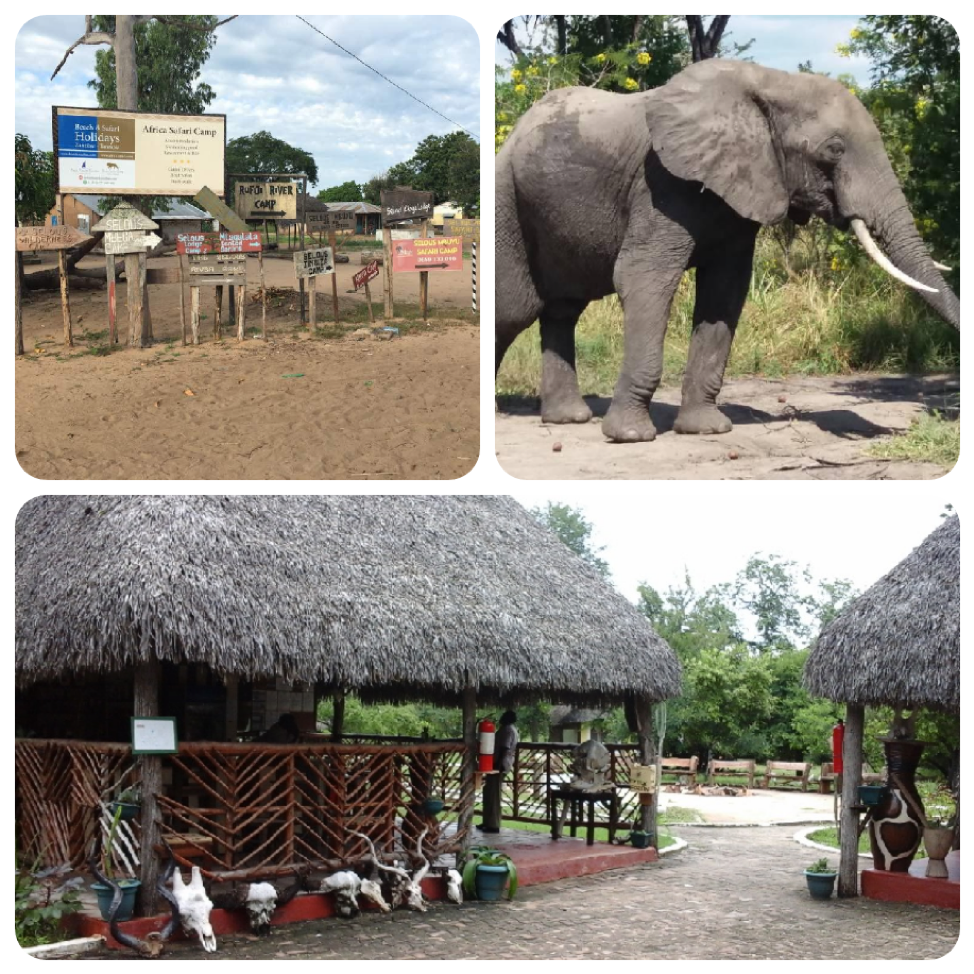
In reality, this often proves difficult as the business of wildlife tourism takes place beyond their control. In order to capture revenues, the local population has to enter into a partnership with well-connected and financially strong individuals and companies. The presence of dangerous animals increases the village’s value for business. Mloka village, where I stayed most of the time during my fieldwork, is an entry point to the Mtemere gate of Selous Game Reserve (SGR). The villages in this region have attracted over 30 private investments for tourism.

Our research project (NEPSUS) seeks to examine how these partnerships have operated and simultaneously changed the way people see and experience wildlife in their backyards. To non-locals, a village where wild animals are regularly present is obviously considered good because it could attract wildlife tourism.

The manager of one of the camps told me that he was very happy because they were blessed to observe a leopard moving around the lodge during the night. Instead of being afraid of the leopard, the manager was content because his customers enjoyed watching it. So is everyone happy? Certainly not. Wildlife is perceived differently by local residents and by business people.

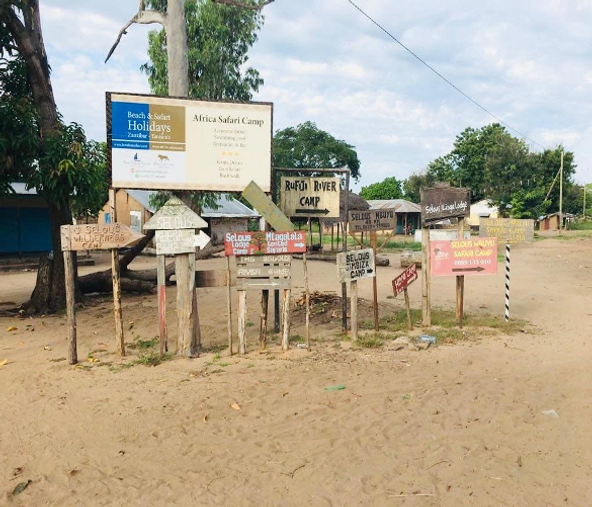
The boards showing the camps/lodges; an elephant in the village and one of the tourist camps in the village. Pictures taken by Ruth John

The relationship between villagers and their business partners can be conflictual. When applying for a permit to conduct business in the villages, investors have to assure in writing that they will help improve social services and employ a majority of local residents. But some of the companies do not stick to their commitment. The number of employees coming from outside the villages very often outnumbers local employees. At the same time, villagers suffer from attacks by wild animals while business benefits.

Love them, hate them

The local population has no other option than to learn how to live with the presence of wild animals, in particular with elephants. Although they are the most powerful animals in the wild, sometimes villagers even have to save them. A previous blog post described the story of a baby elephant that got stuck in a well and had to be rescued. The daily human-wildlife interaction becomes evident as villagers even named some resident elephants after local people. They are able to identify the type of wild animal by observing the foot prints.

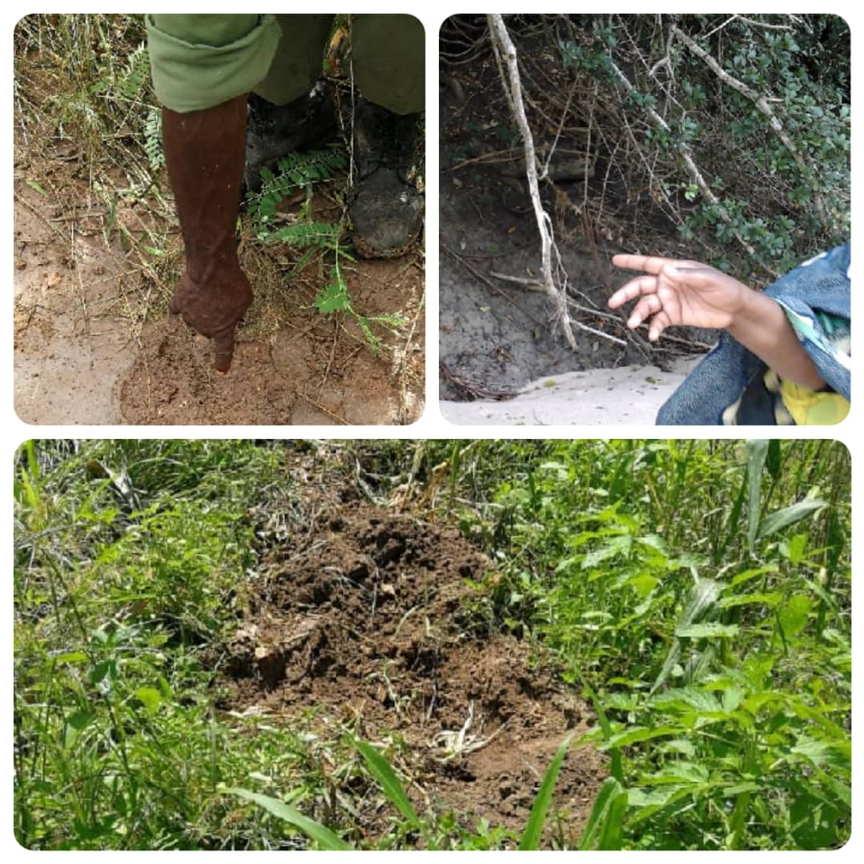
The villagers said that buffaloes, unlike elephants and other animals often stay at the village without being seen, eating maize from the farmlands during the night. Hippos also move around the village land at night time. The Village Game Scout (VGS) and villagers showed me footprints of wild animals in the village as shown in the photos below:

Spotting wildlife footprints in the morning (hippo at the upper left, hyena right and an elephant); pictures taken by Ruth John

For local people, however, wildlife is not as interesting as it is for tourists. It is a daily reality they have to put up with. Our fieldwork showed that living next to Selous Game Reserve poses serious challenges to rural communities in the name of conservation. The conservation of wildlife creates benefits for business operators and threats to local livelihoods. Ensuring that villages benefit from tourism, securing rural livelihoods and successfully overcoming human-wildlife conflicts are the main challenges on the way to sustainable conservation.

  • « Go to Previous Page
  • Page 1
  • Page 2
  • Page 3
  • Page 4
  • Page 5
  • Page 6
  • Page 7
  • Go to Next Page »

Copyright © 2025 · Copenhagen Business School

  • Accessibility Statement
  • Privacy Policy
  • Cookies